Say “retro chic” to five different people and you’ll probably get five different mental pictures — one thinks disco, another thinks poodle skirts, a third pictures shoulder pads. That confusion is exactly why so many people who try the aesthetic either freeze up before they start or end up looking like they raided a costume shop instead of a closet. This guide breaks down what retro chic style actually means, which decades feed into it, and how to wear it so it reads as deliberate and modern rather than like a themed party outfit.

What Retro Chic Style Actually Means
Retro chic is a style philosophy, not a costume. It takes specific, recognizable design cues from earlier decades — mainly the 1950s through the 1980s — and filters them through a present-day fit and sensibility. Instead of dressing head-to-toe in an exact period silhouette, someone wearing retro chic borrows one or two loud signals from the past (a swing skirt, a bold geometric print, cat-eye frames) and grounds everything else in clothes that feel current.
The “chic” part of the name is the whole point. It signals editing and restraint, not historical accuracy. Nobody is grading your outfit on how faithfully it matches a 1962 department store catalog. The goal is a look that feels intentional, polished, and a little bit referential never like cosplay.
Retro Chic vs. Vintage vs. Dated: Sorting Out the Terms
People use these three words as if they’re interchangeable, but they describe different things.
Vintage describes the origin of a garment — a genuine piece manufactured decades ago, whether you bought it at an estate sale or inherited it from a relative. A vintage dress can be styled in a retro chic way, or it can just be worn as-is, which is a different thing entirely.
Dated or “old-fashioned” is what happens when a retro reference shows up without any modernizing element. Take away the current fit, the contemporary pairing, or the editing, and what’s left just reads as out of step with today rather than intentionally referential.
Retro chic sits between the two. It’s the styling approach — deliberately pulling recognizable elements from the past and updating them so the final look feels current. You can build a retro chic outfit from actual vintage clothing, from brand-new reproduction pieces, or from a mix of both. What makes it “retro chic” isn’t the age of the garment; it’s how you style it.
The Four Decades Behind the Look
Almost every retro chic outfit traces back to one of four eras, and each contributes something different.
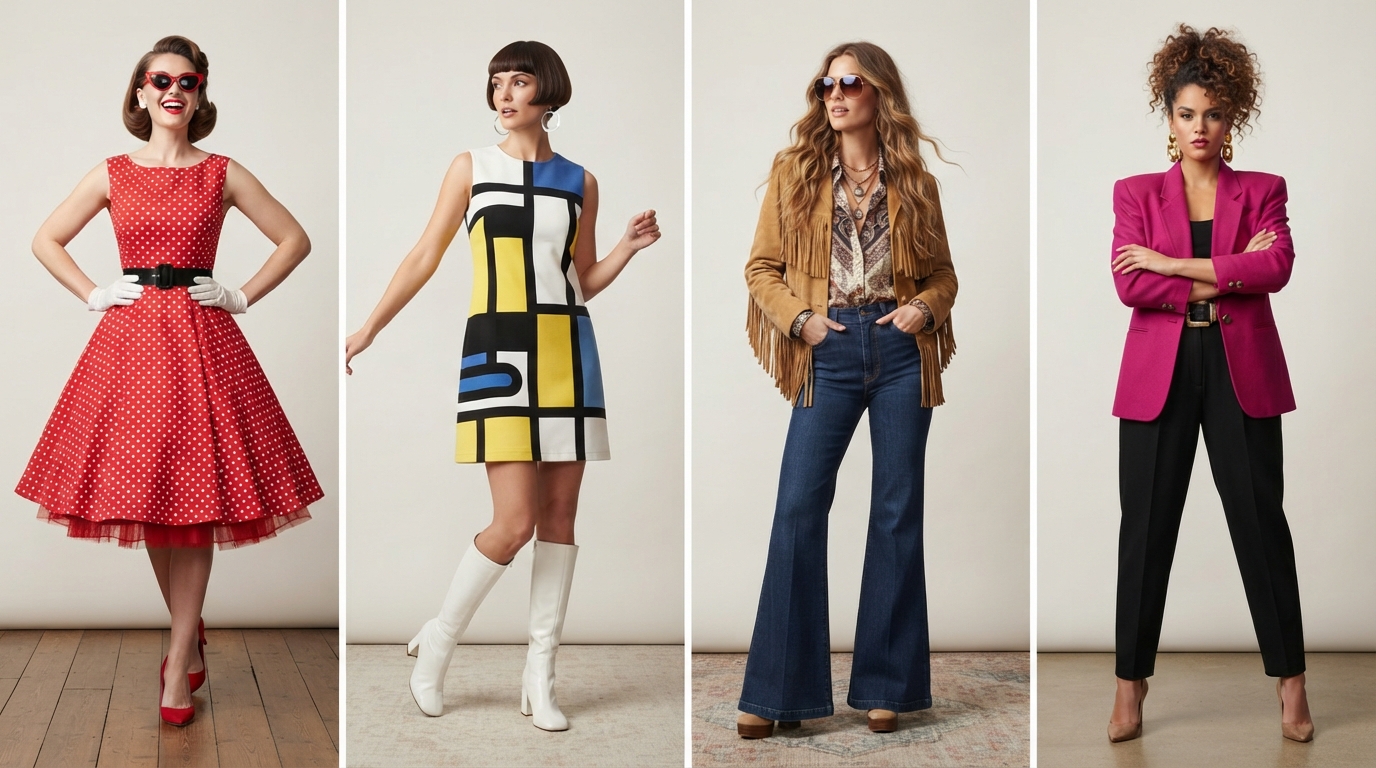
1950s: Structure and Sweetness
The 1950s gave retro chic its most instantly recognizable shapes — nipped waists, full or A-line skirts, and fitted bodices. Polka dots, gingham checks, and cat-eye sunglasses all trace back here, and they tend to feel playful and feminine once translated into a modern fabric and cut.
1960s: Clean Lines, Bold Blocks
The 1960s trade fullness for geometry. Think shift dresses, sharp color blocking, and mod-inflected prints. Of the four eras, 1960s references tend to feel the most streamlined and the easiest to wear in more polished or professional settings.
1970s: Flare and Earth Tones
Wide-leg trousers, flowing silhouettes, suede, fringe, and warm, earthy colors all belong to the 1970s. Because so much of the modern wardrobe leans toward slim and straight cuts, a flared leg or a wide collar from this era tends to stand out immediately — which is part of why it reads as so distinctly retro.
1980s: Maximalism, Used Sparingly
Bold shoulders, saturated color, and statement prints define the 1980s influence. This is also the era retro chic borrows from most cautiously — a single structured blazer works, but a fully committed 1980s silhouette from top to bottom tips into costume territory faster than any other decade on this list.
The Pieces That Build the Look
A short list of garment types shows up again and again in retro chic outfits, no matter which decade is being referenced:
- High-waisted bottoms — skirts, trousers, and shorts with a high rise are one of the single most reliable “retro” signals across every era.
- A-line and fit-and-flare shapes — fitted through the waist, flared below it, borrowed largely from the 1950s and ’60s.
- Statement prints — polka dots, gingham, and saturated florals read as retro rather than just “patterned,” especially in period-true colorways.
- Structured outerwear — a fitted blazer or cropped jacket keeps a retro-leaning outfit from sliding into loungewear territory.
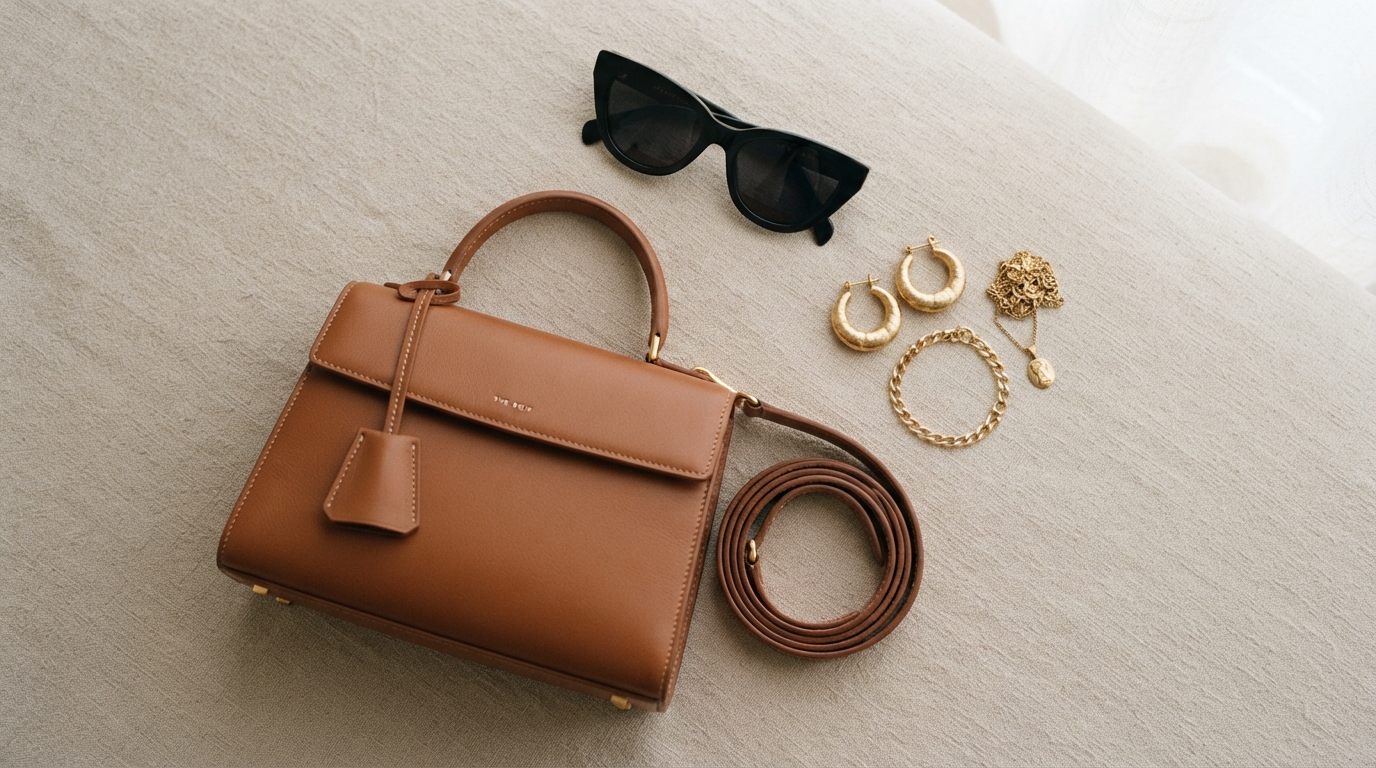
- Cat-eye sunglasses and structured bags — accessories often do more of the “retro” heavy lifting than the actual clothing.
How to Build a Retro Chic Outfit, Step by Step
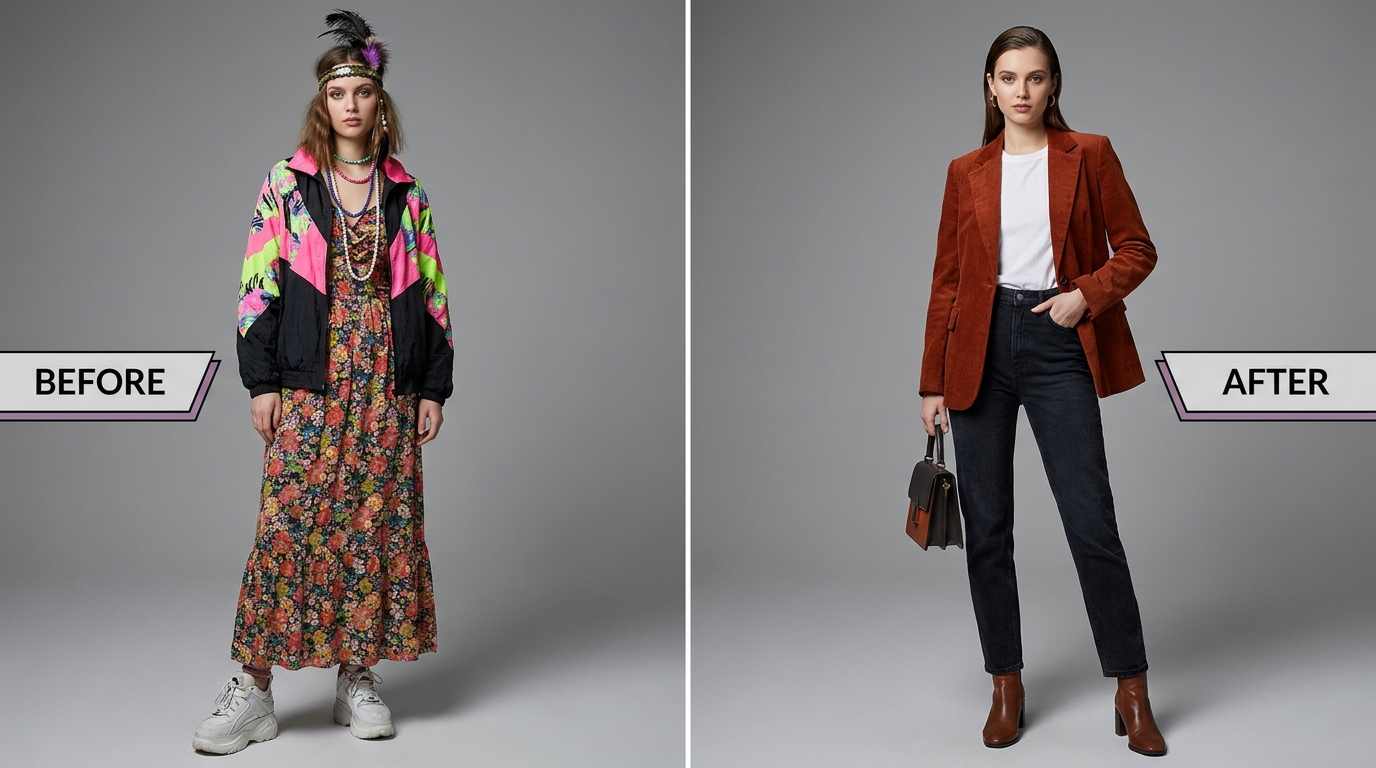
- Choose one era to lead. Combining a ’50s skirt, ’70s prints, and ’80s shoulders in a single outfit is the fastest route to costume territory. Pick a decade and let it lead.
- Pick one anchor piece. Decide which single item will carry the reference — a high-waisted skirt, a bold print blouse, cat-eye frames — rather than trying to make every item in the outfit “retro.”
- Build the rest from modern basics. A well-fitted current top, contemporary denim, or modern shoes keeps the whole look tethered to the present.
- Fit it to your body, not the original era. Vintage sizing conventions differ from today’s. Tailoring matters more than sourcing something period-exact.
- Add one or two retro-specific accessories, no more. Sunglasses, a bag, or a distinctive piece of jewelry reinforces the reference without adding more clothing.
- Do a gut check. If every single element screams the same decade, pull one or two pieces back toward something neutral.

Hair, Makeup, and Accessories
Hair and makeup can carry a retro chic reference without you touching your closet at all. A defined red lip and winged eyeliner nod strongly to the 1950s and ’60s; soft waves or a sleek low ponytail do the same with far less effort. The same rule about restraint applies here too — full period-accurate hair and makeup stacked on top of a fully committed outfit is where a look tips from “styled” into “themed.”
Accessories deserve extra attention because they’re the cheapest, fastest entry point into the aesthetic. A structured bag, cat-eye sunglasses, a neck scarf, or a piece of vintage-style jewelry can shift an entirely ordinary modern outfit toward retro chic in seconds.

Three Levers for Keeping It Modern
Avoiding “costume” comes down to three practical controls.
Fit. A period-true silhouette cut to flatter your actual body today reads as current. The same silhouette in a boxy, ill-fitting cut reads as dated, no matter how “authentic” the piece is.
Quantity. Limit how many loud, era-specific elements appear in one outfit. One statement piece plus modern basics reads as styled. Five statement pieces from the same decade reads as a themed costume.
Pairing. Deliberately combine retro elements with things that are unmistakably modern — current denim, contemporary sneakers, a minimalist bag so the outfit reads as “now, referencing then” instead of a literal recreation.
Common Mistakes to Avoid
Recreating a full decade in one outfit. This is the single fastest way to slide from retro chic into costume. Selective referencing, not full recreation, is the whole point.
Chasing authenticity at the expense of fit. A perfectly “authentic” piece that doesn’t actually fit will undercut the entire outfit. Tailoring matters, even with genuine vintage.
Skipping accessories. Many people assume the look requires a wholesale wardrobe overhaul, when a bag, sunglasses, or jewelry alone can shift a basic outfit most of the way there.
Assuming it requires expensive vintage shopping. Plenty of modern retailers make well-constructed, retro-inspired reproductions at accessible price points genuine vintage is one path in, not the only one.

Building the Look on Any Budget
- Start with one inexpensive, high-impact accessory — cat-eye sunglasses or a structured bag — before investing in full retro-styled clothing, to see whether the aesthetic actually fits your everyday life.
- If you’re thrifting genuine vintage, set aside budget for basic alterations. Fit conventions have shifted enough over the decades that even a great find usually needs adjusting.
- Look specifically for pieces marketed as “retro-inspired” or “vintage-inspired” if you want the look without the fit and care challenges that can come with genuinely old garments.
- Photograph the finished outfit before you leave the house. Reviewing a photo is often the fastest way to catch an outfit tipping from “styled” into “themed.”

Frequently Asked Questions
What decade does retro chic style come from? No single one. It draws most heavily from the 1950s through the 1980s, borrowing selectively from each rather than fully replicating any of them.
Is retro chic the same thing as vintage? No. Vintage describes a garment actually made in a past era. Retro chic describes a styling approach that can use vintage pieces, modern reproductions, or both.
How do I avoid looking like I’m in costume? Focus on fit, cap how many era-specific pieces appear in one outfit, and pair them with clearly modern basics.
Can retro chic style work on a tight budget? Yes — accessories are the cheapest, highest-impact entry point, and many retailers sell retro-inspired reproduction clothing at accessible prices.
Do I need real vintage clothing to pull this off? No. Modern reproductions are widely available and are often easier to fit and maintain than original vintage pieces.
What’s the real difference between retro chic and just “dated”? Dated implies something reads as simply out of step with today. Retro chic implies a deliberate, modernized reference to the past — the difference is usually whether fit, pairing, and restraint are present.
Are there specific colors tied to retro chic? It depends on the era being referenced. 1950s and ’60s looks lean toward bold primaries and pastels; 1970s looks lean earthy and warm. There’s no single retro chic palette.
Can this style work in a professional setting? Yes, especially when it leans on more structured eras like the 1960s. A clean shift-dress silhouette or a tailored blazer with subtle retro detailing tends to work better in business-casual settings than looser, boho-leaning 1970s references.
How many retro pieces should one outfit have? As a rough guideline: one strong anchor piece plus one or two supporting accessories. Stacking several loud, era-specific pieces at once is a common way outfits tip into costume.
Is retro chic still relevant, or has it faded? Specific decade references cycle in and out of favor, but the broader idea — referencing the past through modern styling — has stuck around as a consistent thread in fashion rather than a single passing trend.

Final Takeaway
Retro chic works best as a reference point, not a rulebook. Pick one era, choose a single strong anchor piece, ground it in modern basics, and pay close attention to fit. That combination — restraint plus intention — is what separates a genuinely chic outfit from a literal costume. If you’re just starting out, the lowest-risk entry point is a single accessory added to something you already own and wear, before you invest any further in the aesthetic.
