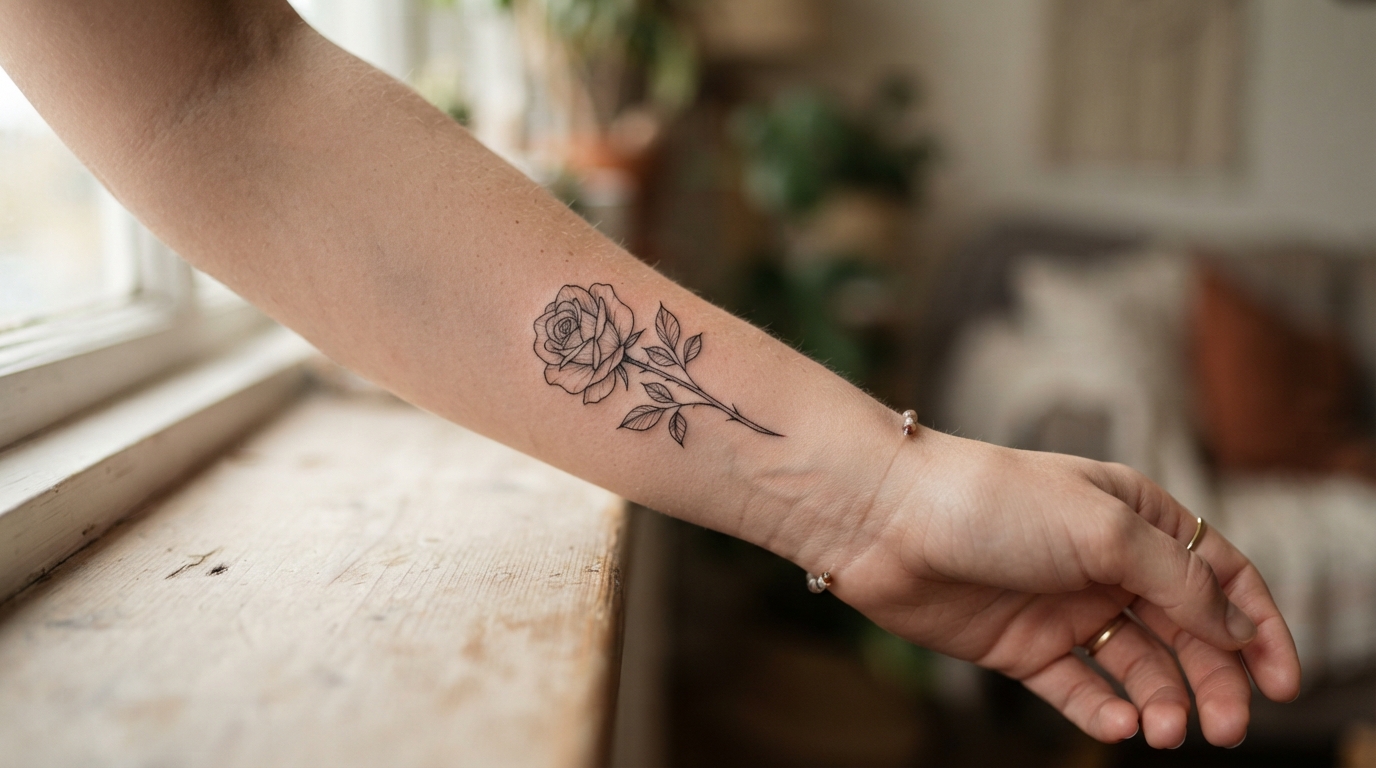
Flowers have been etched into skin for as long as tattooing has existed as an art form, and it’s easy to see why. A single bloom can carry a memory, mark a birth month, honor someone who’s gone, or simply be beautiful for its own sake. Unlike many tattoo motifs, florals bend to almost any technique a tattoo artist knows — delicate fine line, bold neo-traditional, soft watercolor, dense blackwork — which is part of why they remain one of the most requested designs in shops everywhere. This guide walks through the main flower tattoo styles, what different blooms tend to symbolize, where they work best on the body, and what to think through before you sit down in the chair.
Why Flower Tattoos Endure
Botanical tattoos survive trend cycles because they’re endlessly adaptable. A peony can be rendered as a soft, single-line contour or as a saturated, shaded centerpiece. A design can be as small as a fingertip or as large as a full back piece. And because there are thousands of flower species to draw from, two people can get “the same idea” — a flower tattoo — and walk away with designs that look nothing alike. That flexibility, paired with the personal symbolism flowers carry, is why they keep showing up at the top of tattoo trend lists year after year.
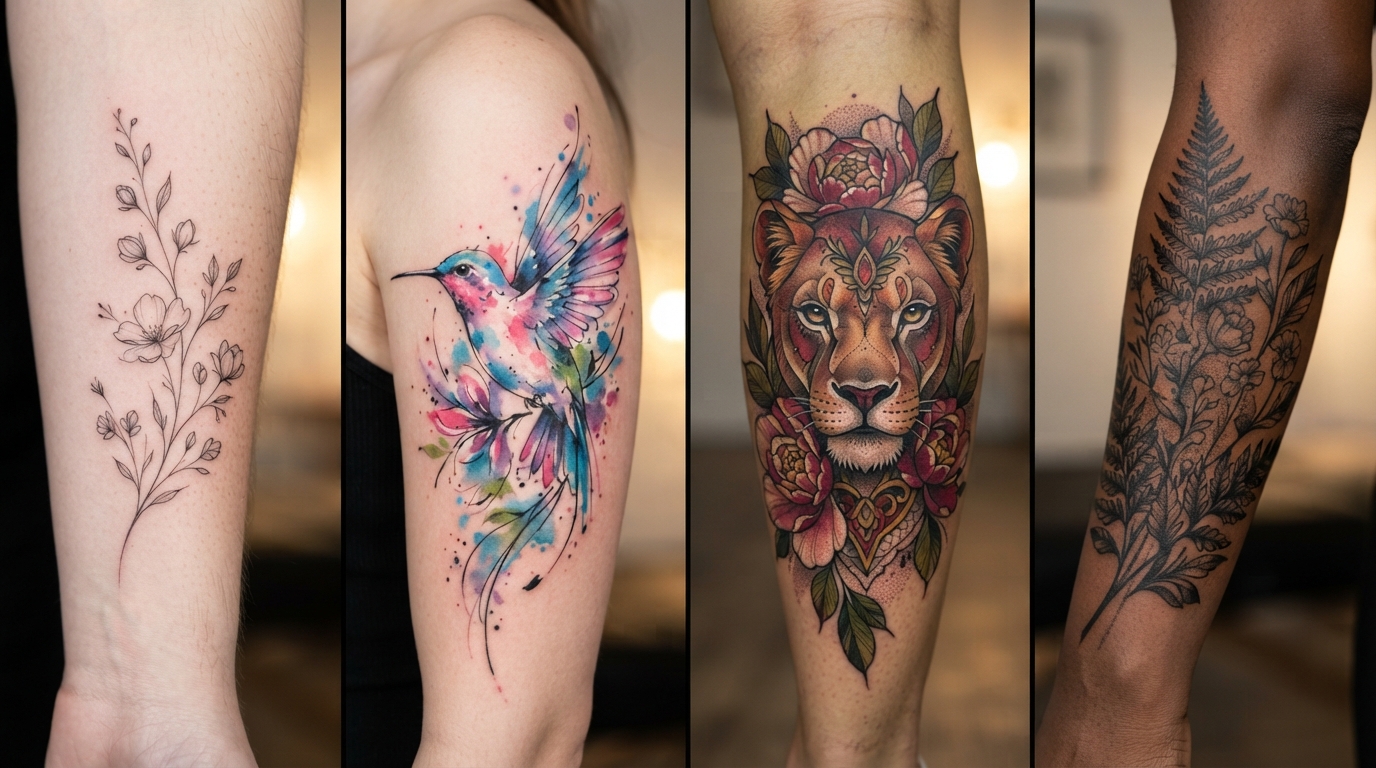
Popular Flower Tattoo Styles
Fine Line and Single-Needle
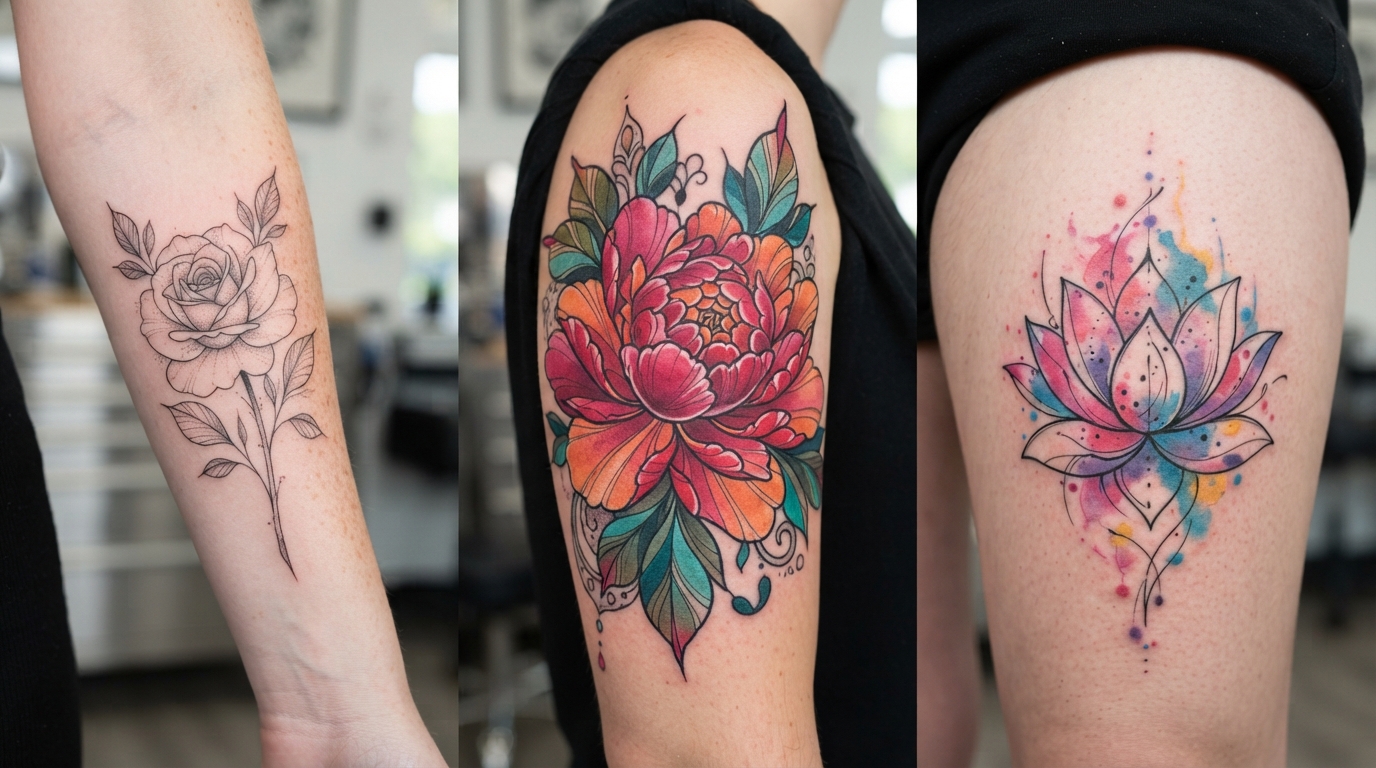
Thin, precise linework with little to no shading. This style favors realism at a small scale and ages well when placed somewhere it won’t stretch or rub, like the forearm, ribcage, or behind the ear.
Watercolor
Soft color washes with blurred, paint-like edges, often layered behind a linear flower outline. Watercolor pieces read as painterly and dreamlike but require touch-ups more often, since diffuse color can fade faster than solid, packed ink.
Neo-Traditional
Bold outlines, saturated color, and stylized proportions — think exaggerated petals and dramatic shading. Neo-traditional florals hold up extremely well over decades because the heavy linework resists blurring.
Blackwork and Botanical Illustration
Dense black ink, often referencing old scientific botanical prints. This style leans into contrast and pattern, and it’s a strong choice for larger pieces like sleeves or back panels where texture matters more than color.
Realism
Photographic shading and gradient work meant to mimic an actual photograph of the flower. Realism demands a skilled, experienced artist and typically needs more space to render convincingly than a minimalist piece.
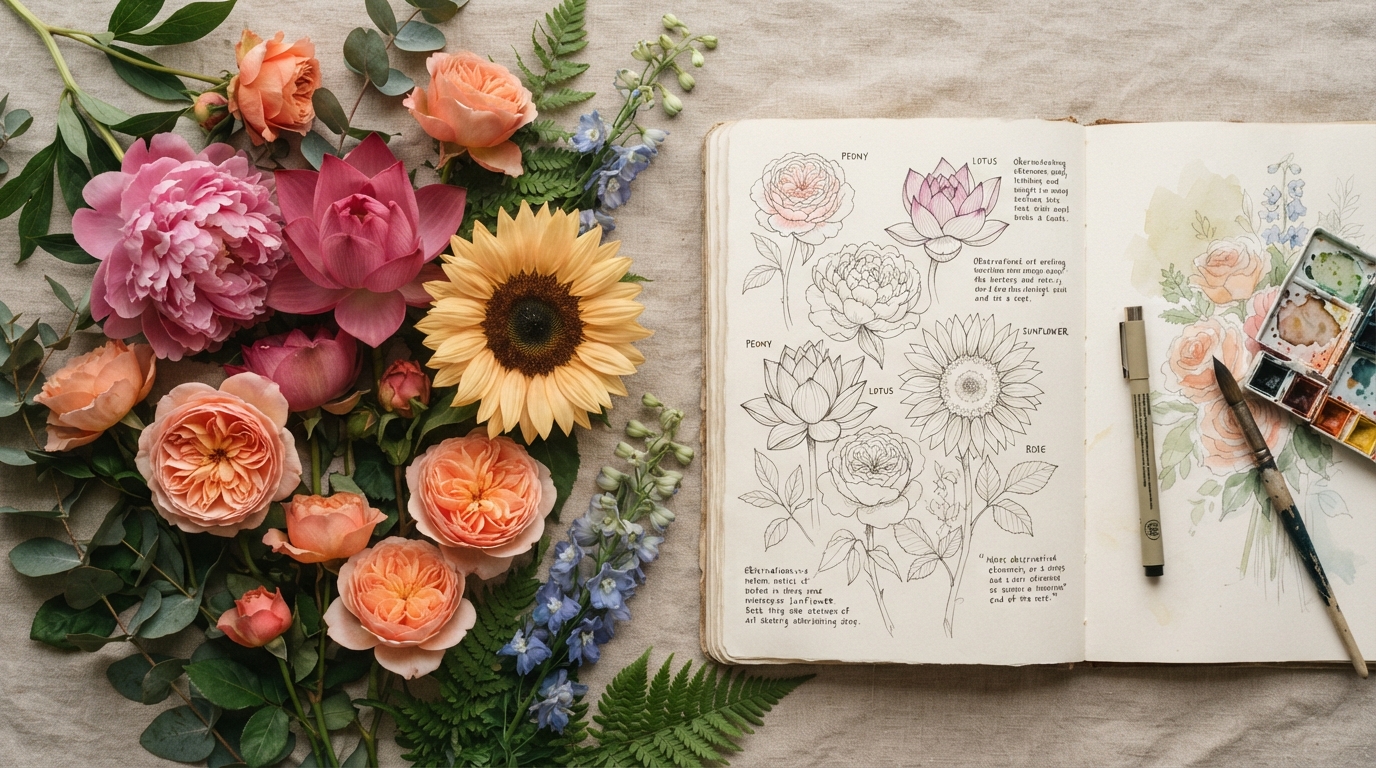
What Different Flowers Symbolize
Choosing a flower isn’t just an aesthetic decision for most people — the meaning behind the bloom is often the whole point.
| Flower | Common Symbolism |
|---|---|
| Rose | Love, passion, balance of beauty and pain (thorns) |
| Peony | Prosperity, honor, romance |
| Lotus | Rebirth, spiritual growth, resilience through hardship |
| Sunflower | Loyalty, warmth, adoration |
| Cherry Blossom | The beauty of impermanence, renewal |
| Poppy | Remembrance, sleep, consolation |
| Lily | Purity, motherhood, rebirth |
| Orchid | Strength, luxury, refined beauty |
| Daisy | Innocence, new beginnings |
| Chrysanthemum | Loyalty, longevity, joy (especially in East Asian traditions) |
Birth Month Flowers: A Popular Personalization Angle
Birth flower tattoos have become one of the most common ways people personalize a floral design, similar to birthstones. A quick reference:
- January: Carnation
- February: Violet
- March: Daffodil
- April: Daisy
- May: Lily of the Valley
- June: Rose
- July: Larkspur
- August: Gladiolus
- September: Aster
- October: Marigold
- November: Chrysanthemum
- December: Narcissus (Paperwhite)
Many people combine their own birth flower with a family member’s, arranging both into a single small bouquet as a quiet, wearable connection.
Placement Ideas by Size and Intent
Small and Minimalist
Wrist, ankle, behind the ear, or a single finger. These spots suit fine-line single stems and tend to be a popular first-tattoo choice because of the lower time and cost commitment.
Statement Pieces
Forearm, shoulder, or upper back. Enough room for a fuller stem with leaves, or a small cluster of two or three blooms.
Large-Scale Botanical Work
Full sleeve, thigh, or back panel. This is where neo-traditional and blackwork botanical styles really open up, allowing an artist to build out a scene — vines, multiple flower types, and negative space working together.
Placement and Longevity
Areas with more consistent skin tension and less UV exposure (upper arm, ribcage, back) generally hold fine detail longer than areas that see constant flexing or sun, like hands or feet.
How to Choose Your Flower Tattoo Design
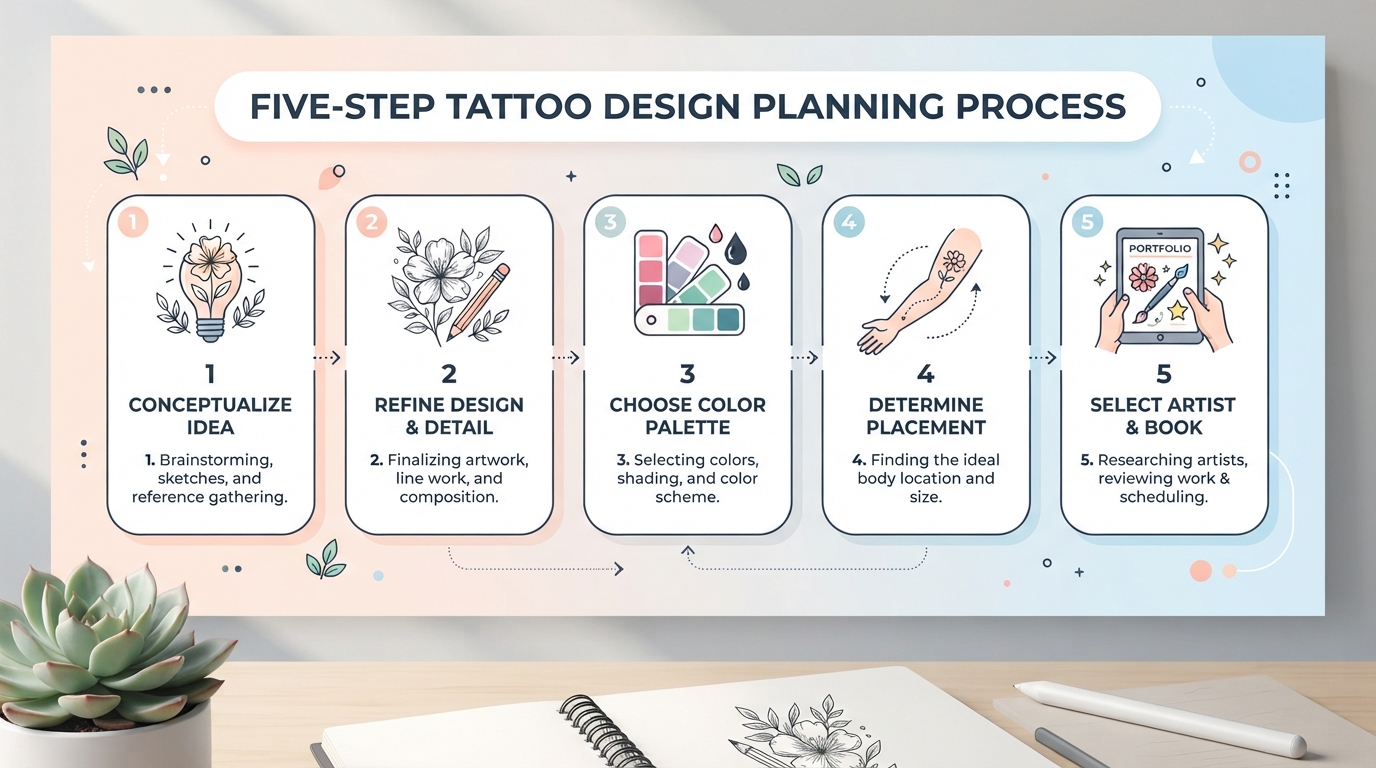
- Start with meaning, not just looks. If the symbolism matters to you, research a few candidate flowers before picking a style.
- Match the style to the placement. A watercolor piece needs more skin real estate to read clearly than a fine-line single stem does.
- Look at an artist’s existing floral work, not just their general portfolio — botanical tattoos have their own technical demands (petal layering, stem taper, shading control).
- Bring reference, not a finished demand. Most tattoo artists do their best work when given a concept and creative room, rather than a design to copy exactly.
- Think about how it ages. Fine detail in small spaces can blur over years; ask your artist how the design will likely look in a decade.
Combining Flowers With Other Elements
Florals rarely stay purely botanical in practice. Common pairings include:
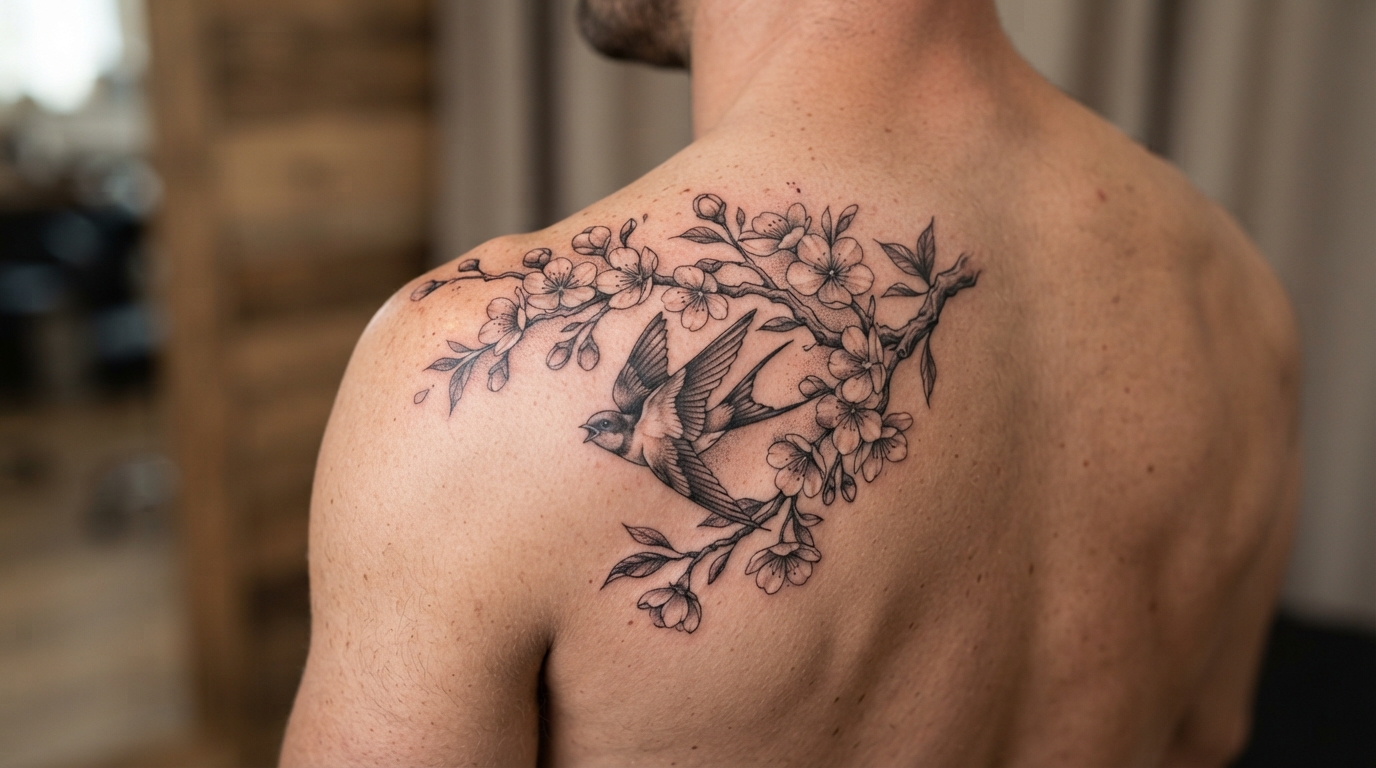
- Flowers and birds — softness paired with movement, often symbolizing freedom or a departed loved one.
- Flowers and butterflies — transformation and fragility together.
- Flowers growing from objects (a skull, a broken chain, an hourglass) — life emerging from hardship or mortality.
- Flowers as line art around text — a name, date, or short phrase framed by a single stem.
Care and Longevity: What to Expect After the Session
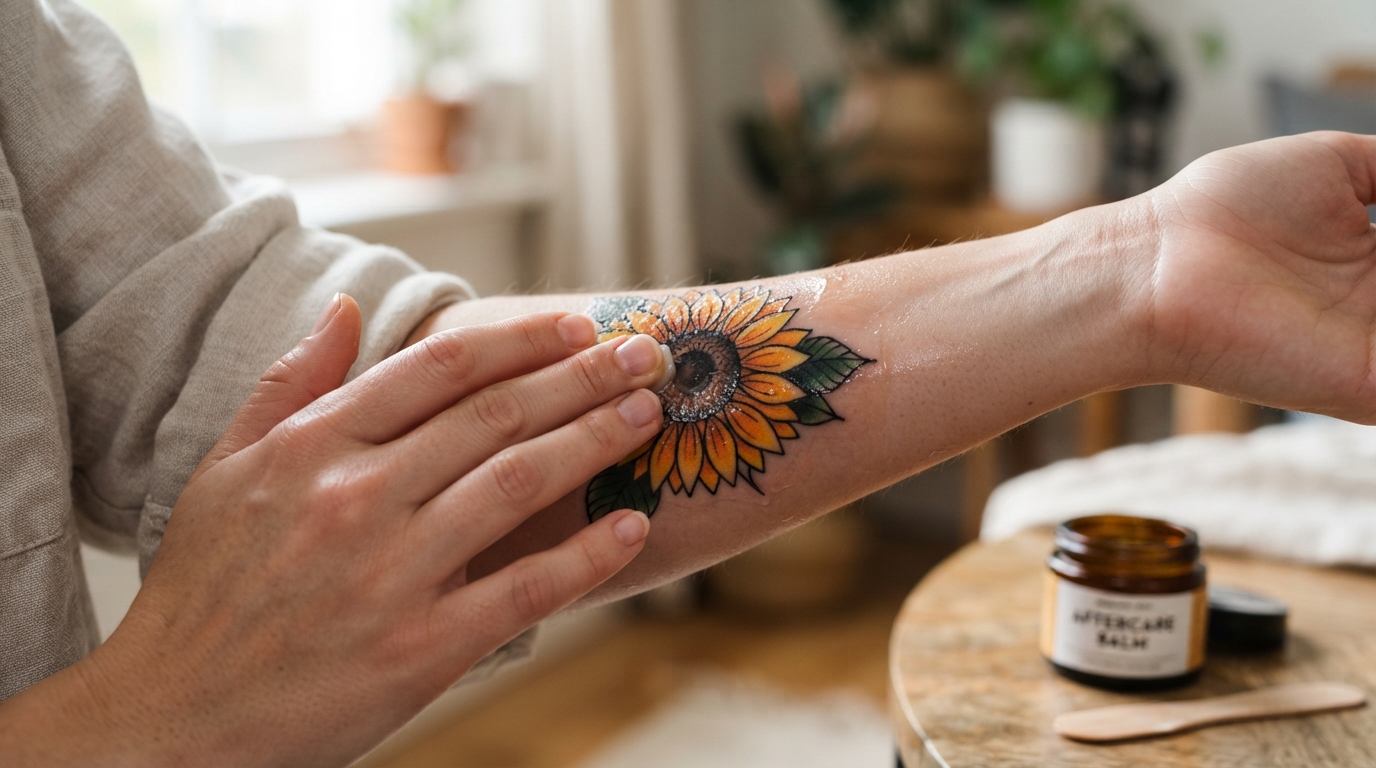
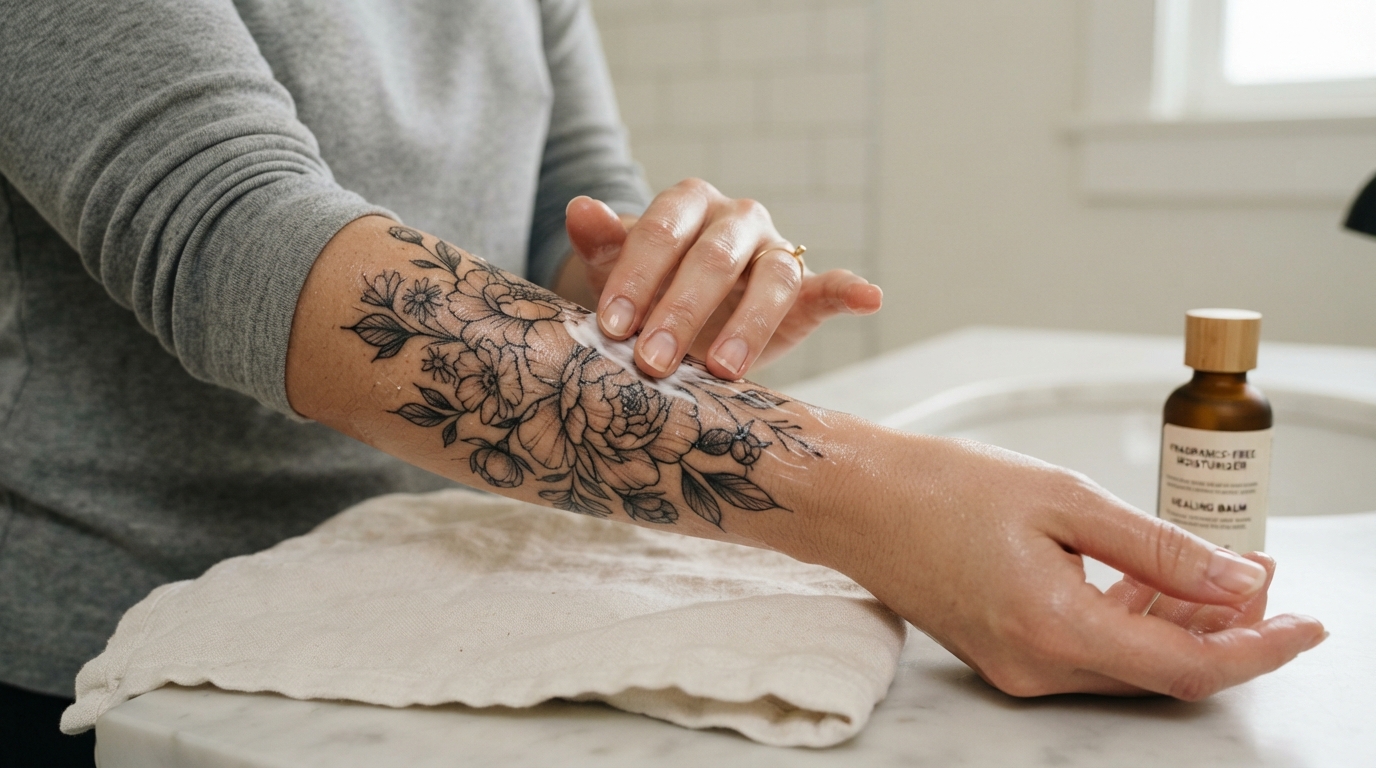
Floral tattoos, especially fine-line and watercolor pieces, are more sensitive to poor aftercare than bold, simple designs because thin lines and soft color transitions are the first details to blur if the skin isn’t cared for properly. Standard aftercare applies: keep the area clean, avoid direct sun during healing, don’t pick at peeling skin, and use a fragrance-free moisturizer as recommended by your artist. Expect touch-up sessions to be more common with watercolor work than with bold blackwork or neo-traditional pieces.
Fine Line vs. Neo-Traditional vs. Watercolor: Quick Comparison
| Factor | Fine Line | Neo-Traditional | Watercolor |
|---|---|---|---|
| Best for | Small, minimalist pieces | Bold statement pieces | Painterly, artistic pieces |
| Longevity | Moderate — can blur over time | Excellent — holds shape well | Lower — fades faster, more touch-ups |
| Healing sensitivity | Moderate | Lower | Higher |
| Typical size | Small to medium | Medium to large | Medium to large |
Key Takeaways
- Flower tattoos work across nearly every tattoo style, from delicate fine line to bold blackwork.
- The specific flower you choose often carries symbolic weight — research meanings before settling on a design.
- Birth month flowers are a popular, low-key way to personalize a piece.
- Placement should account for both the design’s detail level and how the skin in that area ages over time.
- Watercolor and fine-line pieces generally need more aftercare attention and more frequent touch-ups than bold, saturated styles.
Final Thoughts
A flower tattoo is one of the few designs flexible enough to be deeply personal and broadly beautiful at the same time. Whether you’re drawn to a single minimalist stem or a full botanical sleeve, the process is the same: pick a flower that means something to you, choose a style that suits both the design and the placement, and find an artist whose floral work you genuinely admire. Done well, it’s a piece that tends to age as gracefully as the meaning behind it.
FAQ
Q: What is the most popular flower tattoo? A: Roses remain the most commonly requested flower tattoo overall, followed closely by peonies, sunflowers, and lotus flowers.
Q: Do flower tattoos hurt more in certain spots? A: Pain depends more on placement than on the design itself — areas with thin skin and little muscle padding (ribs, feet, inner arm) tend to be more sensitive regardless of what’s being tattooed.
Q: How long do flower tattoos take to heal? A: Most flower tattoos heal within two to four weeks on the surface, though full healing beneath the skin can take up to three months.
Q: Can I combine two different flowers in one tattoo? A: Yes — combining birth month flowers, a personal favorite with a symbolic one, or several blooms into a small bouquet is a common and popular approach.
Q: Is a flower tattoo a good first tattoo? A: Often, yes. Small, fine-line florals are frequently recommended as first tattoos because they’re relatively quick, less painful due to smaller size, and easy to place somewhere discreet.