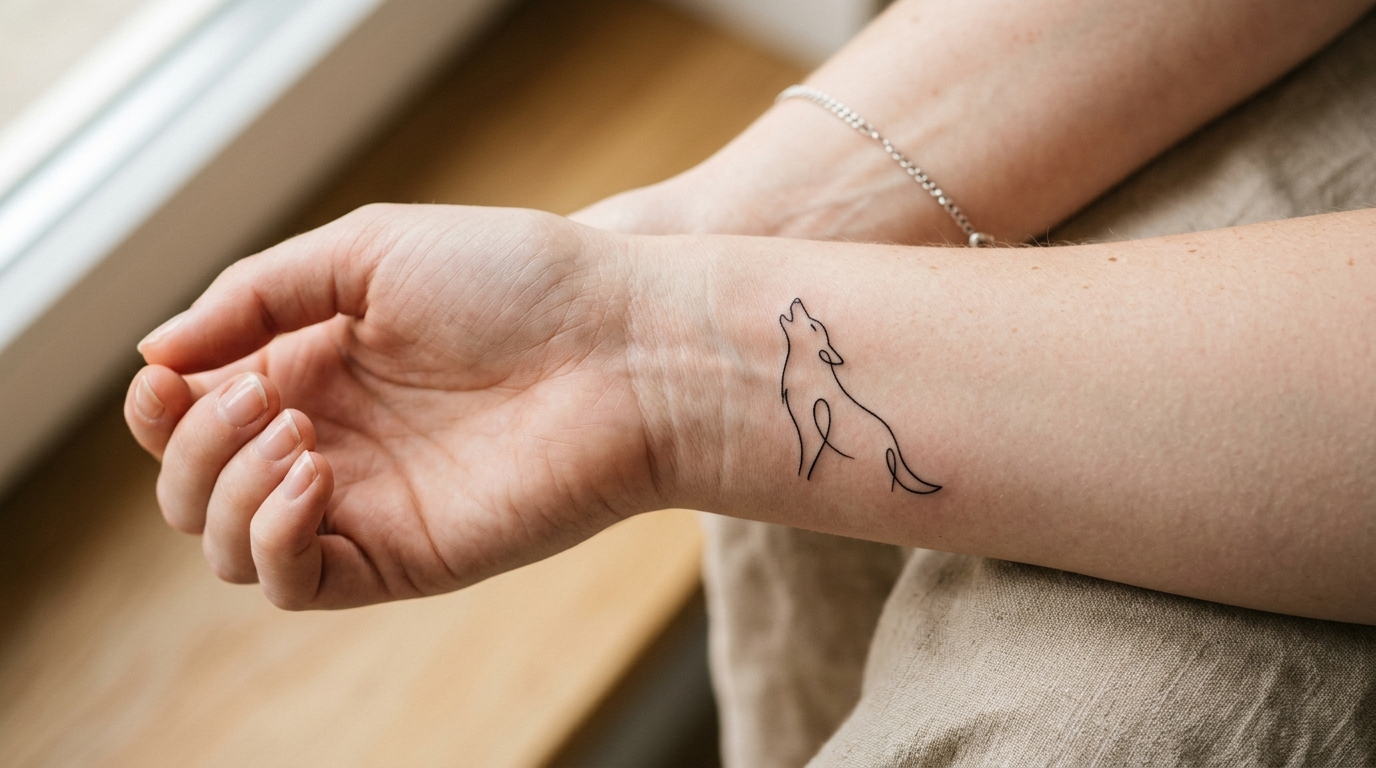
A wolf tattoo works at almost any size and in almost any style, which is exactly why it remains one of the most requested animal designs in tattoo studios worldwide. But “wolf tattoo” isn’t one design it’s a category with dozens of directions, each carrying a different meaning, a different healing curve, and a very different price tag.
This guide breaks down every major wolf tattoo style, what each one actually means, where it holds up best on the body, and the mistakes that show up most often once the ink settles.
Which Wolf Tattoo Style Fits You Best?
Your style choice affects your session length, your budget, and how the tattoo ages far more than the subject itself does.
| Style | Best For | What to Expect |
|---|---|---|
| Black & grey realism | Portraits, pack scenes, forest backdrops | Longest sessions, highest skill requirement, needs the most space |
| Fine line & geometric | Forearms, calves, thighs, tighter budgets | Fast to tattoo, clean at first, thin lines soften over time |
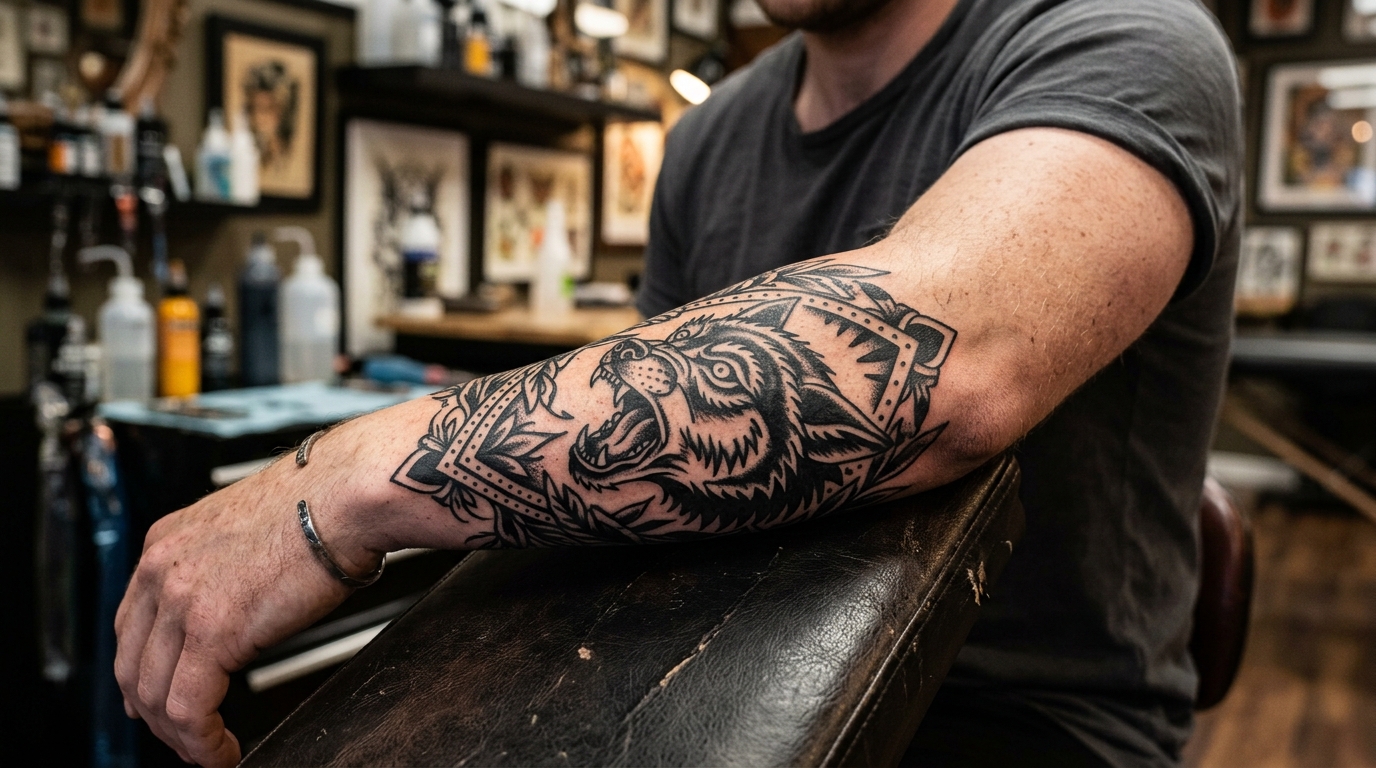
| Neo-traditional | Upper arms, thighs, muted color palettes | Strong shapes with soft shading; ages well |
| American traditional | Bold, high-visibility placements | Thick outlines and flat color; the most durable long-term option |
| Watercolor | Colorful, expressive designs | Beautiful when fresh; unanchored splashes fade fastest |
| Celtic & Norse knotwork | Heritage pieces, shoulder/chest | Heavy black; spacing matters more than line detail |
| Sketch & outline | First tattoos, small placements | Short, affordable sessions; deliberately unfinished look |
What Does a Wolf Tattoo Actually Mean?
There’s no single universal meaning behind a wolf tattoo — the symbolism shifts dramatically depending on the mythology or culture it draws from.
In Norse mythology, Fenrir — the monstrous wolf-son of Loki — represents restrained power and inevitable fate, not loyalty. Roman tradition flips that entirely: the she-wolf who nursed Romulus and Remus symbolizes protection, nurturing, and origin. Celtic and various Indigenous traditions layer in their own meanings again, so the same wolf silhouette can represent a guardian in one context and a destructive force in another.
The modern, more universal reading leans on wolf behavior itself. Wolves are highly social animals that hunt in coordinated family units, which is why most people today associate wolf tattoos with a blend of loyalty, family bonds, and self-sufficiency rather than pure ferocity.
The practical takeaway: decide on your meaning before you decide on your style. A lone howling wolf and a wolf surrounded by pups are not interchangeable designs, even though both technically qualify as “wolf tattoos.”
Wolf Tattoo Ideas by Style
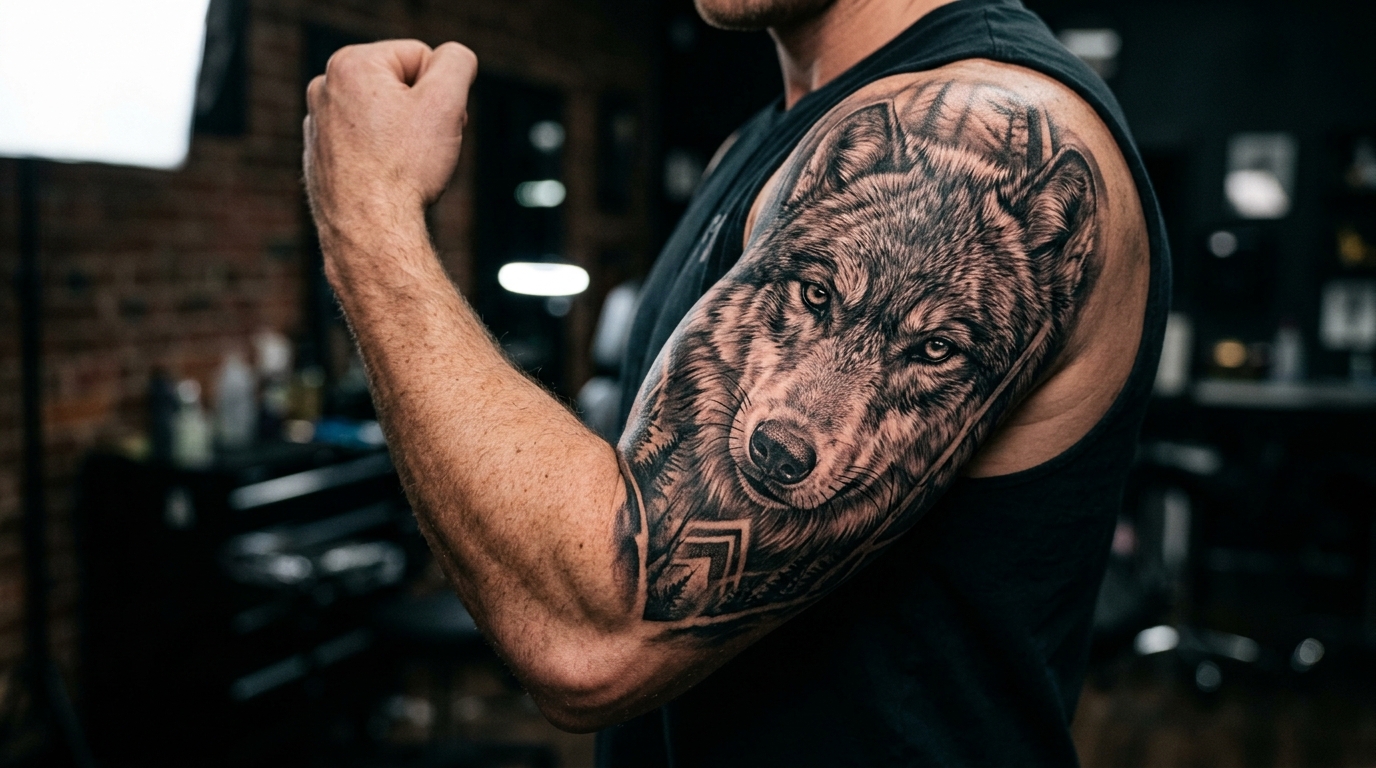
1. Realistic Black-and-Grey Wolf Portraits
Realistic wolf portraits are the most technically demanding style on this list and the most rewarding when done well. The entire design lives or dies on the eyes and the transition from dense fur into open skin.
This style typically requires multiple sessions for anything larger than a hand’s width, and it demands an artist who specializes specifically in portrait realism, not just tattooing in general. Ask to see healed photos rather than fresh ones fine grey shading is where a strong realism artist separates from an average one.
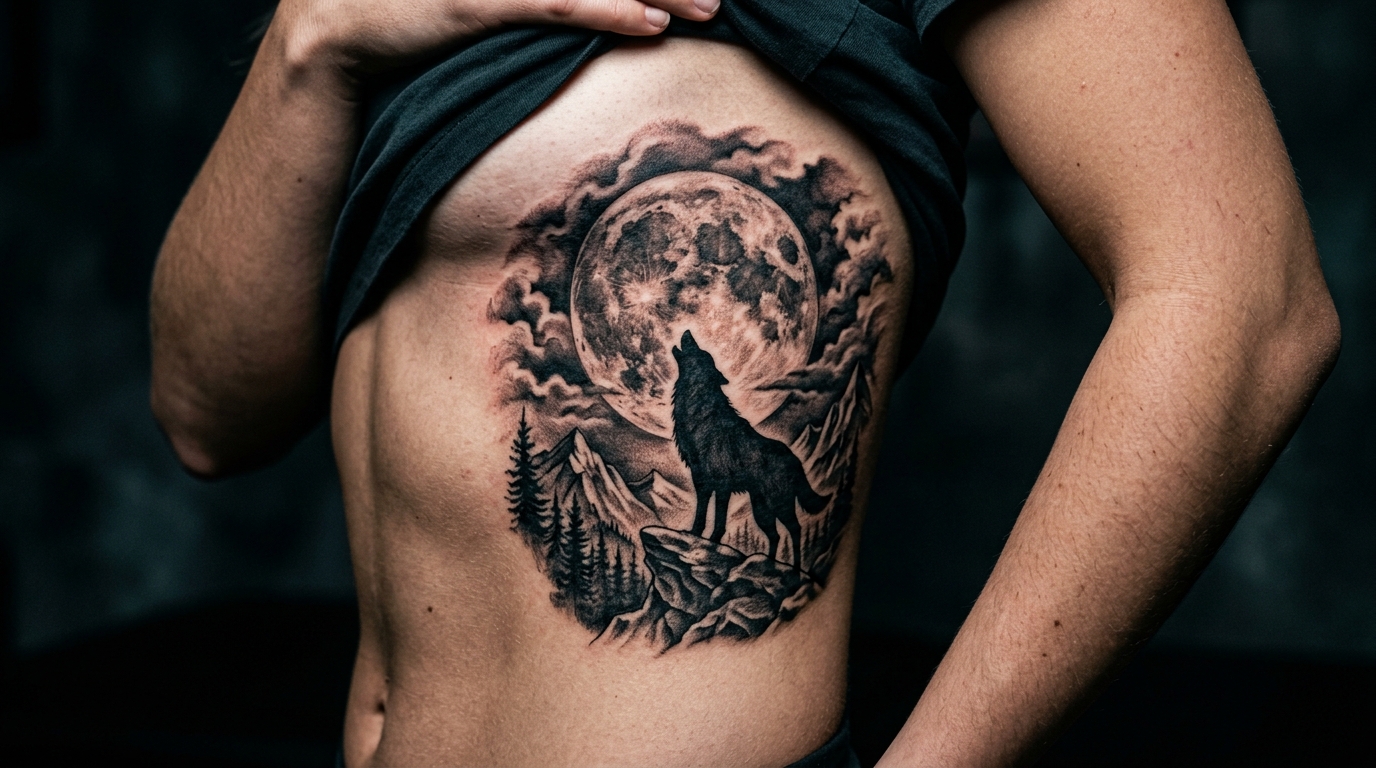
2. Howling Wolf and Moon Designs
The howl-and-moon combination is the single most requested wolf composition, and it’s popular for both symbolic and practical reasons. A raised muzzle creates a strong diagonal line, while a circular moon behind it gives the whole piece a natural frame — ideal for shoulders and upper arms.
The moon treatment changes everything about the final look: a stippled, fine-line moon keeps the design light and airy, while a heavy black night sky with smoke commits you to more solid shading and a longer healing period.
3. Wolves Blended Into Forest and Mountain Landscapes
Double-exposure designs where a wolf’s head dissolves into a treeline or mountain range have been one of the strongest tattoo trends of recent years. They work especially well on forearms and calves, which offer the long vertical canvas this composition needs.
The biggest risk with this style is density. When every inch of the design is textured, the eye has nowhere to rest and the tattoo can read as a grey smudge from a distance. Deliberate negative space usually in the sky or lower third — is what keeps these pieces sharp.

4. Pack and Family Wolf Tattoos
For clients focused on family symbolism rather than solitude, multiple wolves communicate that meaning far more directly than a single wolf ever could. A stacked-heads layout three wolf profiles running down the forearm — is a clean, popular solution because it matches the natural shape of the limb.
If you’re considering one wolf per family member, plan the full composition upfront. Adding a new head later usually means redesigning the entire piece rather than simply extending it.
5. Geometric and Fine-Line Wolves
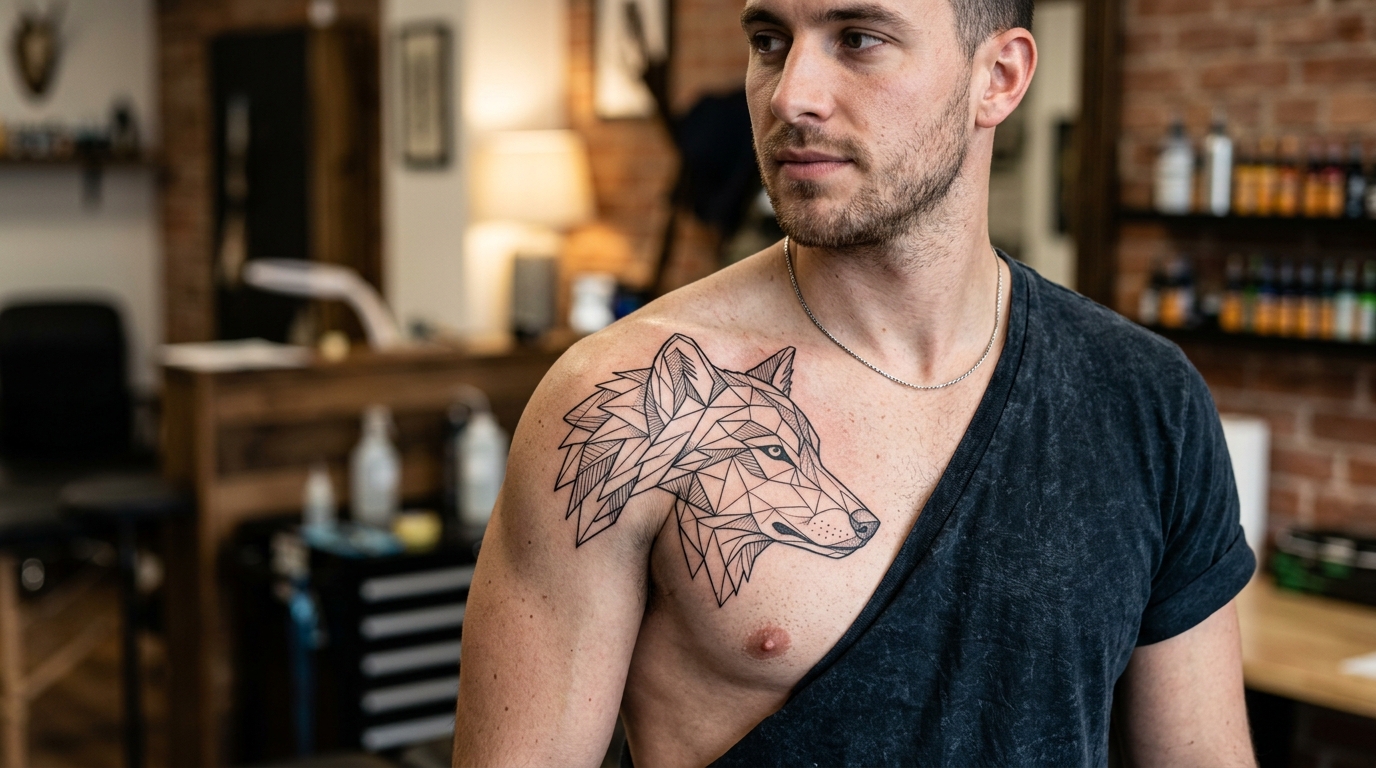
Geometric wolves trade photographic realism for graphic, stylized impact. The “split” design half realistic fur, half faceted geometric planes has become something of a modern classic, visually representing duality without needing any text.
The trade-off is longevity: very thin lines and isolated dots spread slightly as skin ages. If you love this style, ask your artist to build in a few heavier anchor lines to help the design hold its shape over the next decade.
6. Watercolor and Illustrative Color Wolves
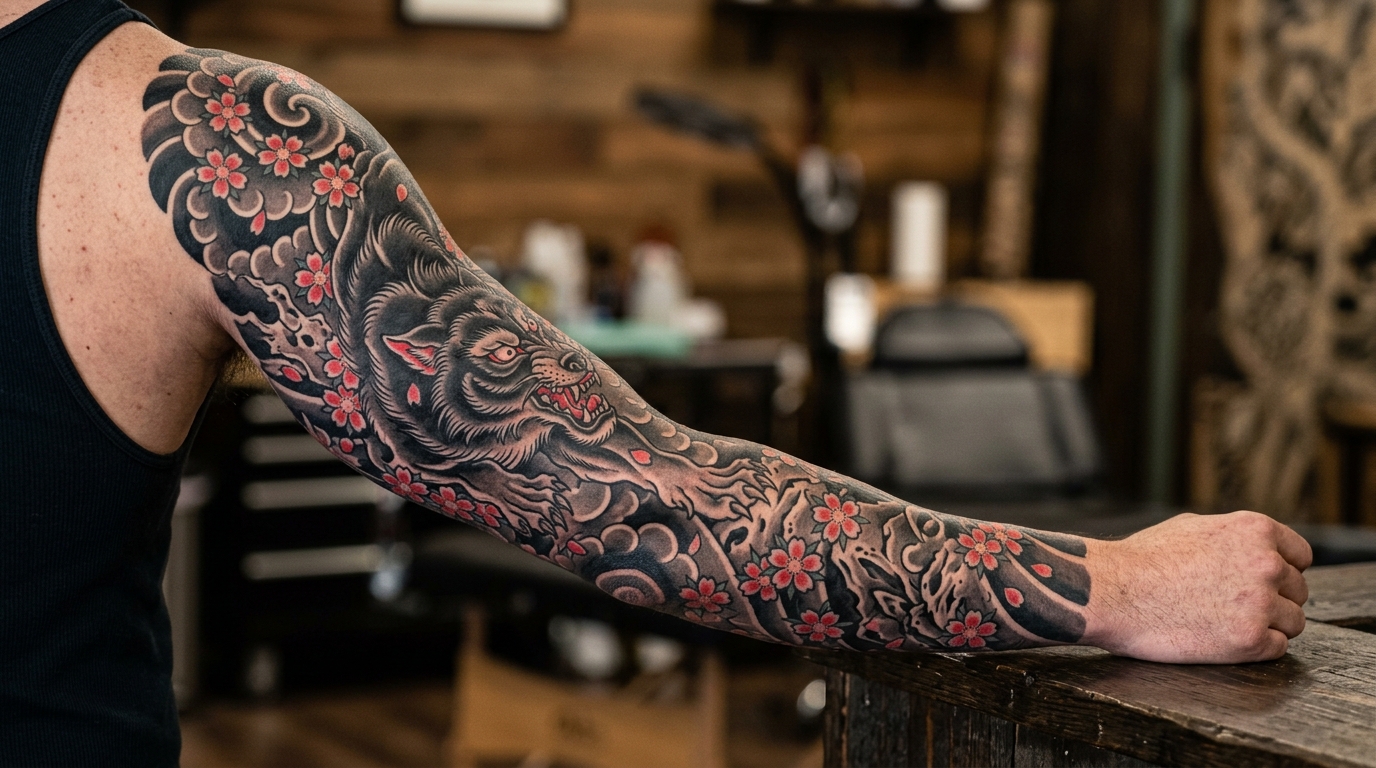
Color opens up creative territory that black and grey simply can’t reach arctic blues and snowflakes, or a full autumn palette wrapped around the arm. The best-aging color wolf tattoos keep the animal itself anchored in grey or muted tones, letting the color live in the background rather than the subject.
Watercolor splashes with no linework underneath are the ones most likely to disappoint after a few years there’s no structural line holding the shape together. A light line or grey wash beneath the color solves this.
7. Neo-Traditional and American Traditional Wolves
If longevity and readability from across a room matter most to you, this is the most reliable choice on the list. American traditional relies on bold outlines and flat color a combination that holds up exceptionally well as skin ages. Neo-traditional keeps those same strong shapes while allowing softer shading and a wider color palette.
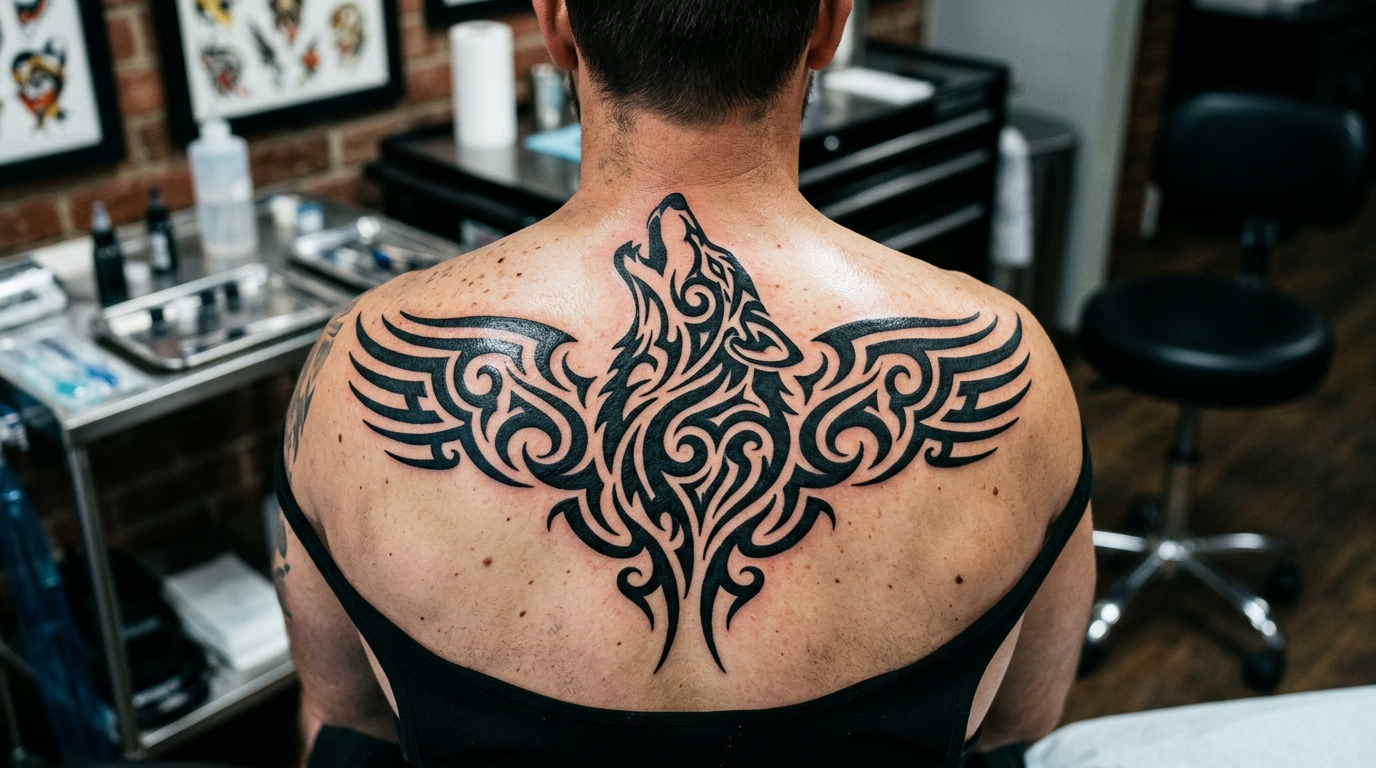
Celtic, Norse, and Tribal Wolves
Knotwork and tribal wolf designs are built from shape and negative space rather than shading, making them a fundamentally different kind of commission. With interlaced Celtic knotwork specifically, the spacing between strands matters more than the strands themselves black lines spread slightly over time, and overly tight weaving can lose definition.
Sketch, Outline, and Small Wolf Tattoos
Sketch-style wolves keep visible construction lines, as though the drawing was caught mid-process — a deliberately unfinished aesthetic. They’re quick, affordable, and forgiving, making them a smart choice for a first tattoo. They also scale down far better than realism does; a small standing wolf with a light treeline stays legible at palm-size, while a shrunken realistic portrait tends to lose the detail that made it worth doing in the first place.
Wolf Tattoo Design Comparison: Style vs. Longevity vs. Session Length
| Style | Longevity | Avg. Session Length | Best Placement |
|---|---|---|---|
| Black & grey realism | Excellent | Multiple long sessions | Forearm, calf, thigh, back |
| Fine line/geometric | Moderate | Single short session | Forearm, ankle, calf |
| Neo-traditional | Very good | 1–2 sessions | Upper arm, thigh |
| American traditional | Excellent | 1 session | Upper arm, chest, back |
| Watercolor | Fair (needs line anchor) | 1–2 sessions | Forearm, upper arm |
| Celtic/Norse knotwork | Good | 1–2 sessions | Shoulder, chest |
| Sketch/outline | Good | Single short session | Forearm, calf, upper arm |
[IMAGE 8: Comparison/Analysis Visual Infographic table comparing tattoo styles by longevity and session length]
Placement, Size, and Aftercare
Wolves suit long, roughly rectangular canvases which is exactly why forearms, calves, and outer thighs dominate this category. Before committing, have your artist apply a stencil and walk around with it for a few minutes; a composition that looks perfect on paper can sit awkwardly once it wraps around a limb.
Placement also affects how the session physically feels. Outer forearms and calves are generally easier to tattoo through than ribs, sternum, or inner arm areas. For healing, always follow your specific artist’s instructions over generic advice found online, since studios differ in their wrapping and washing protocols.
Important: Spreading redness, worsening swelling after the first few days, pus, or fever are signs of possible infection or allergic reaction and should be evaluated by a medical professional not addressed through home remedies or forum advice.
Common Mistakes to Avoid
- Booking a realism piece with a non-realism artist. Style specialization is real — ask to see an artist’s specific portfolio in the style you want.
- Going too small for the amount of detail. A wolf portrait with individual fur strokes needs space; compressed into a small area, those strokes blur into grey within a few years.
- Planning piecemeal. If there’s any chance you’ll extend into a larger piece or sleeve later, sketch the full layout now — even if you only tattoo part of it initially.
- Choosing symbolism without research. If you’re pairing your wolf with a compass, dagger, or other meaningful object, understand how that specific combination is typically read before committing.
Key Takeaways
- Decide the story first — a lone wolf, a pack, or a landscape-blended wolf all carry different meanings.
- Match your style to your placement; long limbs suit wolf heads and chests naturally.
- Black and grey realism demands the most space, time, and artist specialization.
- Fine line and geometric styles are faster and cheaper but soften more with age.
- Color tattoos age best when the wolf itself stays anchored in solid black or grey.
- Always review an artist’s healed work, not just fresh photos, before booking.
- Plan for future extensions upfront if you might expand into a larger piece.
- Treat any sign of infection or allergic reaction as a medical issue, not a cosmetic one.
Frequently Asked Questions
How much does a wolf tattoo usually cost? Cost depends far more on size, style, and your artist’s hourly rate than on the subject itself. A small outline wolf might take a single short session, while a realistic wolf-and-forest half sleeve is typically booked across several full days. Always request a written quote based on estimated hours before booking.
Do wolf tattoos hurt more than other designs? The design itself doesn’t change the pain level — placement and shading style do. Outer forearms, outer thighs, and calves are generally easier, while ribs, sternum, inner arm, and the top of the foot tend to be more sensitive. Heavy black or smoke shading requires more passes over the same skin, which is usually what people remember as the most uncomfortable part.
Does a wolf tattoo mean you’re a “lone wolf”? Not necessarily. A single howling wolf is often read as independence, while a wolf with pups or a stacked pack of heads usually represents family and loyalty instead. Because wolves appear across Norse, Celtic, Roman, and various Indigenous traditions, the same image can carry very different weight depending on the cultural context.
What’s the best placement for a wolf tattoo? Forearms and calves suit wolves particularly well due to their long, rectangular shape matching a wolf’s head-and-chest profile. Upper arms and shoulders work well for rounder compositions, like a moon backdrop. Full scenes with forest and mountain elements generally need a half sleeve, thigh, or back piece to avoid feeling cramped.
How long does a wolf tattoo take to heal? The surface typically settles within two to three weeks, while deeper skin layers continue healing for a couple of months larger black and grey pieces often sit at the longer end of that range. Always follow your specific artist’s aftercare instructions, and treat spreading redness, worsening swelling, pus, or fever as reasons to seek medical attention.