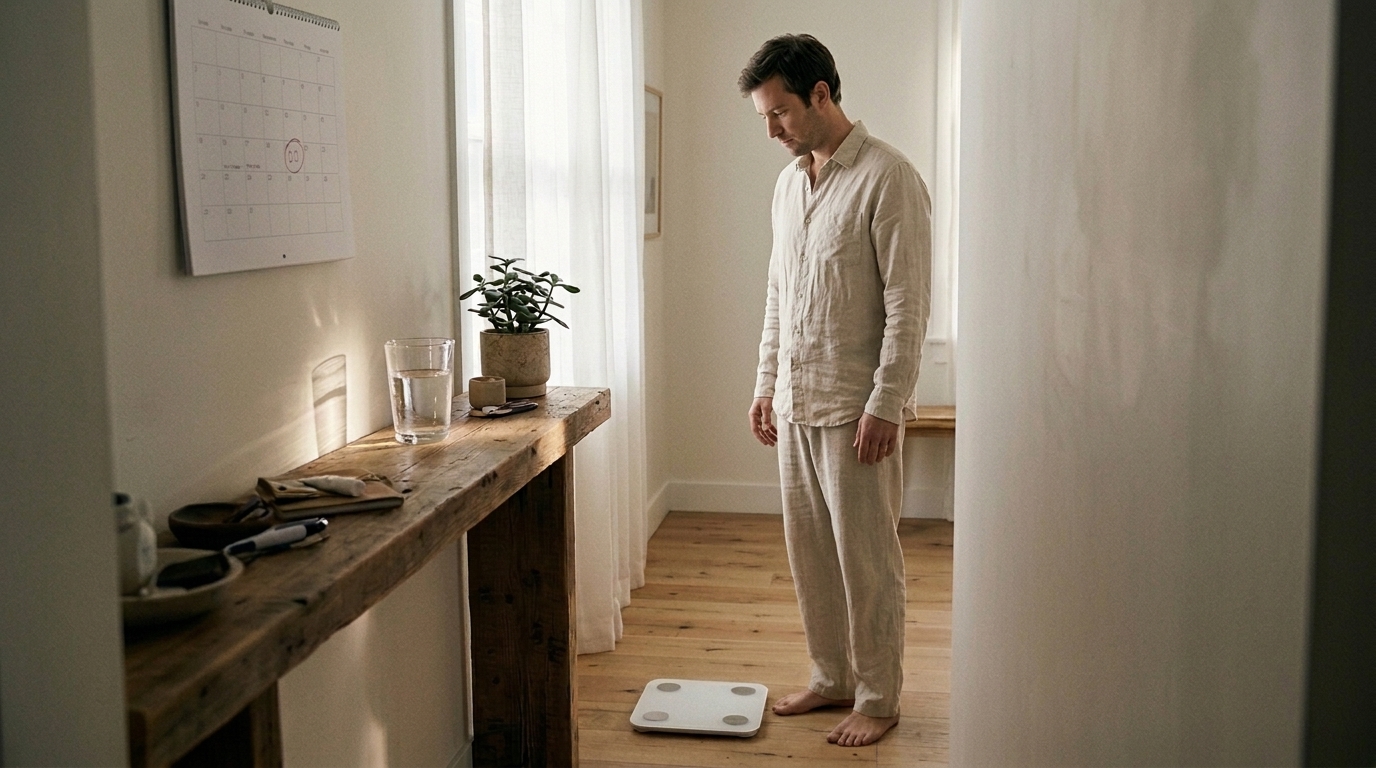
Almost everyone has stared at a calendar and wished for a quick drop on the scale before a wedding, a beach trip, or a big photo. Rapid weight loss searches spike every season for that reason. But the number on the scale in seven days tells a different story from the one happening in your body. This guide covers what a fast week of changes can Lose 10 Pounds in a Week , what it can’t, and the habits that give you the best shot at feeling lighter.
Can You Really Lose 10 Pounds in a Week?
Short answer: you might see the scale move a lot, but very little of it will be body fat.
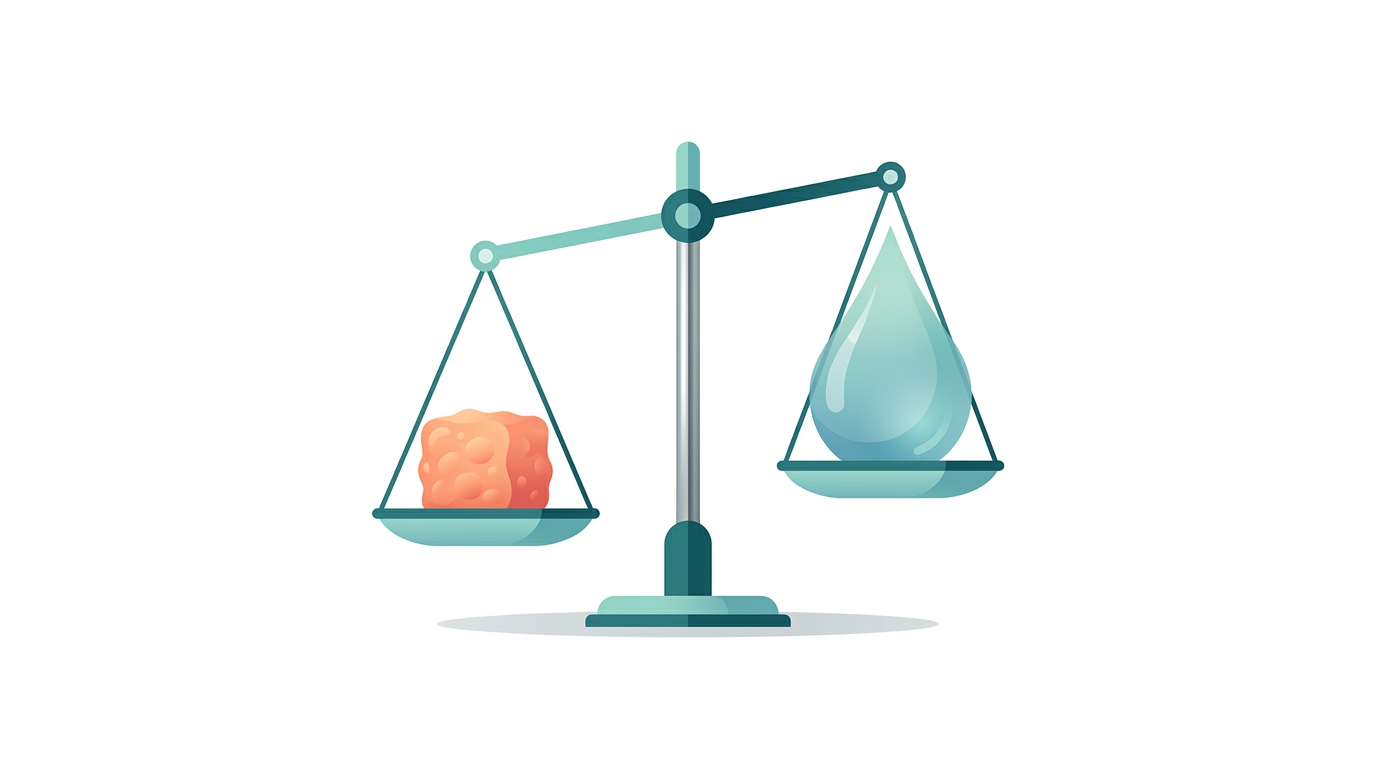
Fat loss versus water weight
A pound of body fat is roughly 3,500 calories of stored energy. Burning 10 pounds of fat in seven days would mean a deficit of around 5,000 calories every single day, which is far beyond what a healthy body can sustain. Health agencies such as the CDC describe about 1 to 2 pounds of fat loss per week as a steady, sustainable pace.
What changes quickly is water. Your muscles store carbohydrate as glycogen, and each gram of glycogen holds several grams of water. When you eat fewer refined carbs and less salt, your body releases some of that water, and the scale drops fast.
Why the first week looks dramatic
Bloating, digestive contents, and fluid retention all swing from day to day. Someone who cleans up their eating habits can easily see a few pounds disappear in the first days, then watch progress slow down. That’s normal, and it doesn’t mean the plan stopped working.
A better way to Lose 10 Pounds in a Week
Treat week one as a reset, not a finish line. Two to five pounds with a flatter stomach and better energy is a good outcome. Anything promising 10 pounds of fat in seven days, especially if it involves starving yourself, skipping meals, or laxatives and diuretics, can cause dizziness, muscle loss, and rebound weight gain.
Seven Habits for a Lighter, Less Bloated Week
These steps work together. None requires extreme restriction, and all of them are safe to keep doing after the week ends.
1. Hydrate and Cut Liquid Calories
Water supports digestion, helps your kidneys clear excess sodium, and can take the edge off hunger. A practical target is to sip steadily through the day and drink a glass before meals. Urine that is pale yellow is a handy sign you’re on track.
The bigger win TO Lose 10 Pounds in a Week is what you stop drinking. Soda, sweetened coffee drinks, bottled juice, and alcohol can add several hundred calories a day without making you feel full. Swapping them for water, sparkling water, unsweetened tea, or black coffee is one of the easiest deficits you can create.
2. Build Meals Around Protein
Protein keeps you full longer than carbohydrate or fat does, and your body spends more energy digesting it. It also helps protect muscle while you eat less, which matters because muscle is what keeps your metabolism from sagging.
Good options include eggs, chicken, turkey, fish, Greek yogurt, cottage cheese, tofu, tempeh, and lentils. Pair them with non-starchy vegetables like broccoli, spinach, zucchini, and cauliflower so your plate stays voluminous and filling.
You don’t need to eliminate carbohydrates. Trimming refined ones such as pastries, white bread, and sugary cereal, and keeping modest portions of whole grains or potatoes, works for most people and is easier to stick with.

3. Load Up on Fiber
Fiber slows digestion, steadies blood sugar, and makes meals more satisfying. It also keeps things moving, which helps with that heavy, bloated feeling.
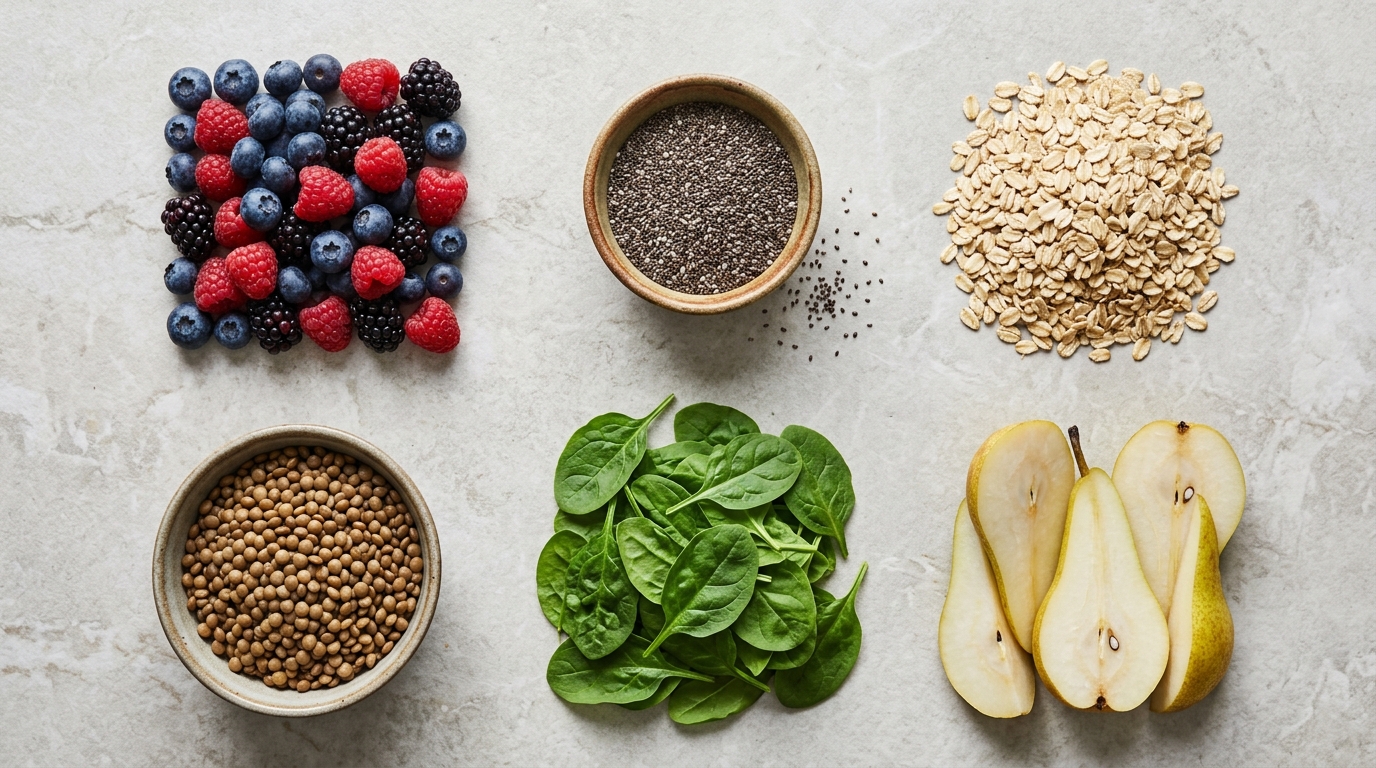
Easy sources are berries, apples, pears, leafy greens, Brussels sprouts, chia and flax seeds, oats, beans, and lentils. If you’re not used to much fiber, add it gradually and drink plenty of water, or you may end up more bloated, not less.
4. Go Easy on Ultra-Processed Foods and Sodium
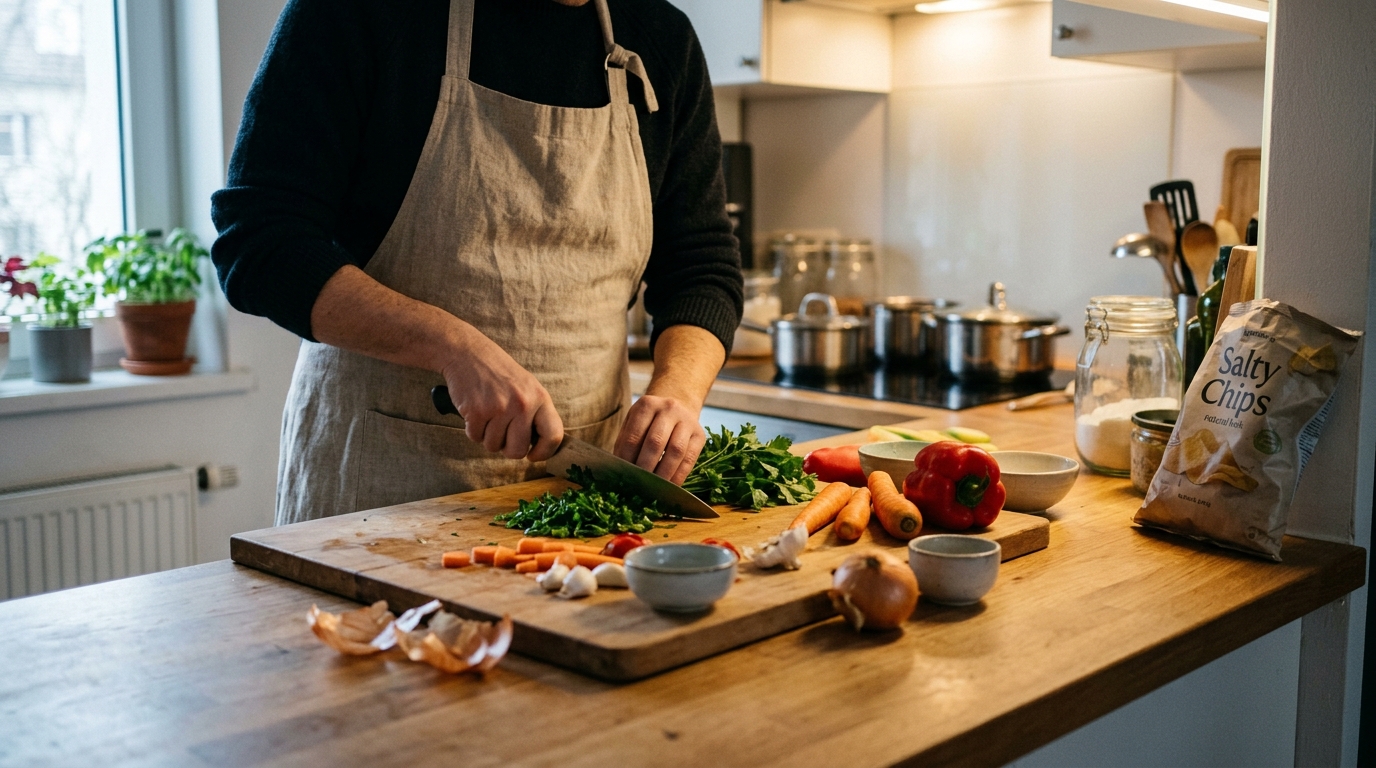
Packaged snacks, deli meats, instant noodles, and restaurant meals tend to be high in both refined starch and salt. Sodium makes your body hold extra fluid, so a salty weekend can add a few pounds of water overnight.
Cooking at home gives you control. Simple swaps help: cauliflower rice for white rice, zucchini noodles for part of your pasta, lettuce wraps instead of bread, and herbs, citrus, and spices instead of heavy salting. Don’t cut sodium to zero, since your body needs some, but avoiding the heaviest sources makes a noticeable difference.

5. Move Every Day
You don’t need to live at the gym. Consistency matters more than intensity:
- Walking: A brisk 30 to 45 minute walk is easy on joints, burns a meaningful number of calories, and helps with stress. A short walk after meals can also help with digestion and blood sugar.
- Interval training: Short bursts of hard effort followed by rest are time-efficient, but build up gradually and skip them if you’re new to exercise or have a medical condition.
- Strength training: Lifting weights or doing bodyweight moves two or three times a week helps you keep muscle, which supports your metabolism long term.

6. Protect Your Sleep
Poor sleep raises hunger hormones, makes high-calorie foods more tempting, and lowers the energy you have for exercise. Aim for seven to eight hours. Dim the lights an hour before bed, put screens away, keep the room cool and quiet, and try shifting bedtime 30 minutes earlier to start.

7. Manage Stress Before It Manages Your Plate
Chronic stress raises cortisol, which is linked to increased appetite and stronger cravings for comfort food. Short, repeatable habits help: a few slow breaths before you reach for a snack, ten minutes outside, light stretching or yoga, or a few lines in a journal.
What About Liver Health and “Detox” Supplements?
Many weight loss articles claim a sluggish liver blocks fat loss and that a “liver support” supplement can fix it. That’s not backed by good evidence.
Your liver does matter for metabolism, and it’s affected by heavy alcohol use, excess body fat, and diets high in ultra-processed food. But a healthy liver already clears waste on its own. No supplement has been shown to speed up fat loss by “detoxing” it, and the supplement industry is loosely regulated, so the claims on labels often outrun the research. Some herbal products have even been linked to liver injury.
The most reliable ways to support your liver are the habits above: limiting alcohol, eating more whole foods, staying active, and sleeping well. If you’re considering any supplement, check with a doctor or pharmacist first, particularly if you take medication, are pregnant, or have a health condition. If you want a lasting result, spend that money on groceries instead.

Your Seven-Day Snapshot To Lose 10 Pounds in a Week
Hydrate steadily, build each meal around protein and vegetables, add fiber, cut back on sugary drinks and salty packaged food, walk daily, protect your sleep, and give stress a few minutes of attention each day. Expect your clothes to feel looser and your stomach to feel flatter, and expect the scale to move partly because of water. Then keep going: the real payoff is what you do in week two, three, and four.
Stop and talk to a healthcare professional if you feel faint, have persistent fatigue, or are tempted to go well below your usual intake to hit a number. A fast target should never override your health.