
Ask five people to describe Retro Chic Style and you’ll hear five different answers: disco, poodle skirts, shoulder pads, mod mini dresses, flared denim. That confusion is why so many people either freeze before they start or end up looking like they borrowed an outfit from a themed party.
Retro chic style is simpler than it sounds. It means borrowing one or two clear signals from the past and letting everything else stay modern. This guide explains the term, breaks down the four decades behind the look, and gives you a step-by-step method for building outfits that read as deliberate, polished, and current.

What Retro Chic Style Actually Means
Retro chic is a styling philosophy, not a costume. It takes recognizable design cues from the 1950s through the 1980s and filters them through a modern fit and a modern attitude. Instead of dressing head to toe in one period silhouette, you pick a single bold reference, such as a swing skirt, a geometric print, or cat-eye frames, and ground the rest of the outfit in clothes that feel current.
The word “chic” does the heavy lifting. It signals editing and restraint rather than historical accuracy. Nobody is checking your outfit against a 1962 department-store catalog. The aim is a look that feels intentional and a little referential, never like cosplay.
Retro Chic vs. Vintage vs. Dated
These three terms are often used interchangeably, but they describe different things.
| Term | What it describes | Example |
|---|---|---|
| Vintage | The origin of a garment: a genuine piece made decades ago | A 1970s suede jacket from an estate sale |
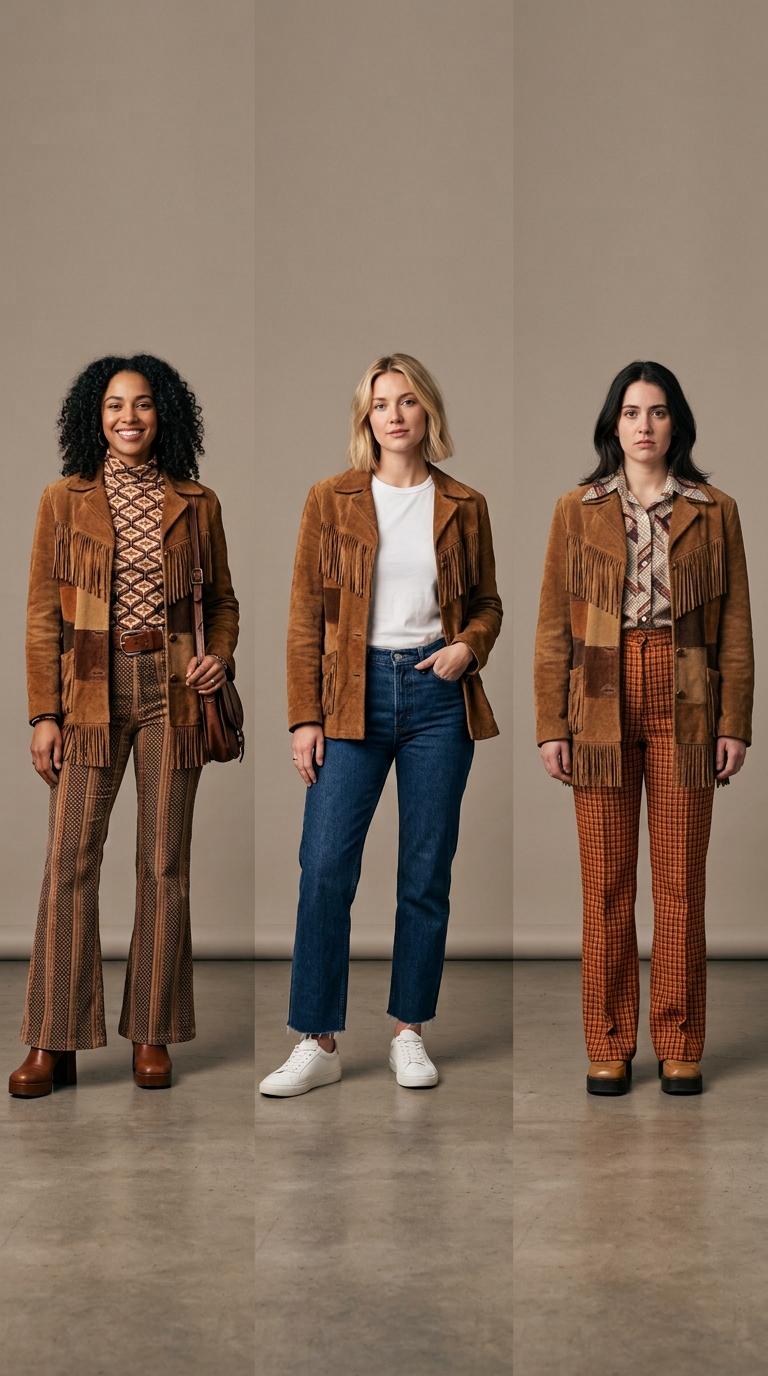
| Retro chic | A styling approach: past references updated for today | That same jacket with modern denim and clean sneakers |
| Dated | A past reference with no modernizing element | The whole outfit from one decade, in a boxy, ill-fitting cut |
You can build retro chic from real vintage, from new reproduction pieces, or from a mix. What makes it retro chic is not the age of the clothes. It is how you style them.

The Four Decades Behind the Look
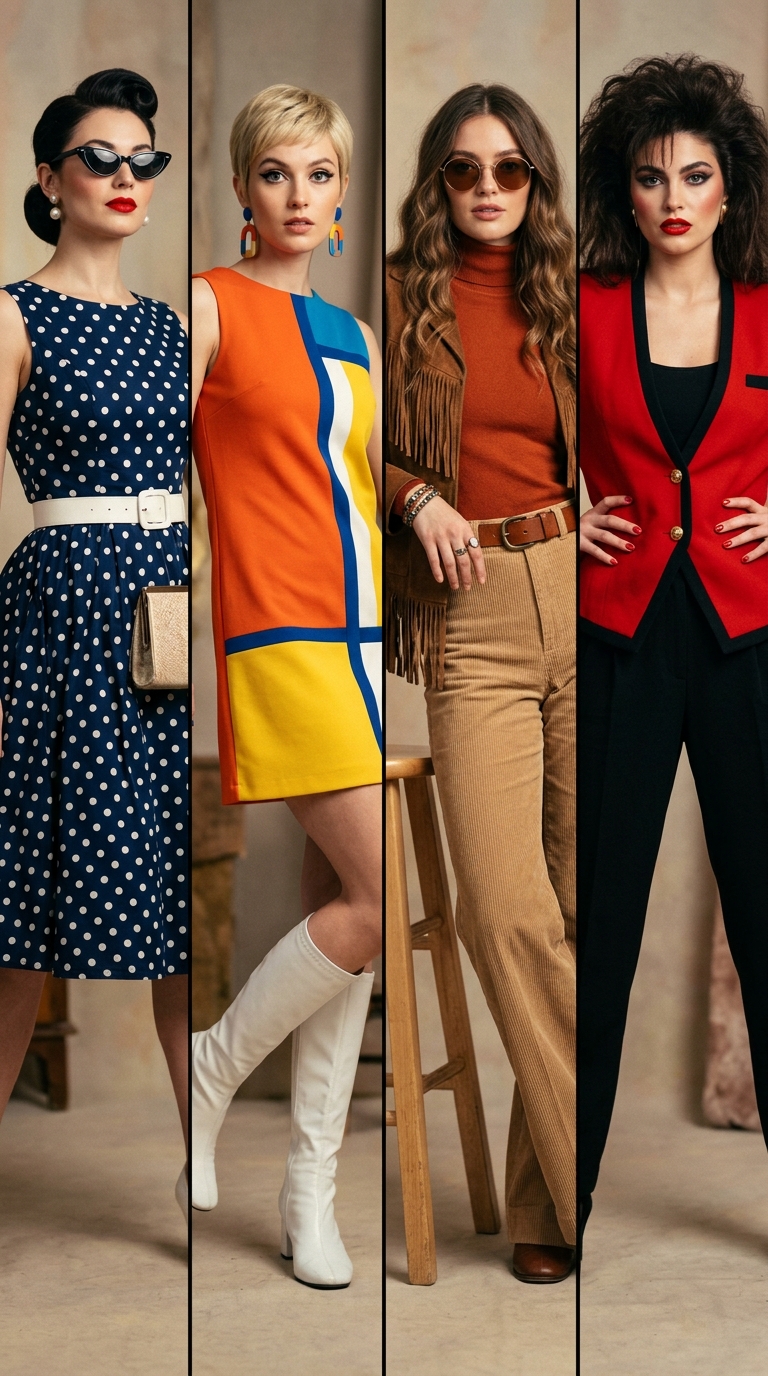
Nearly every retro chic outfit traces back to one of four eras. Each contributes a different mood.
| Decade | Signature cues | Mood | Best for |
|---|---|---|---|
| 1950s | Nipped waists, full skirts, polka dots, gingham, cat-eye sunglasses | Playful, feminine | Weekends, brunch, social events |
| 1960s | Shift dresses, color blocking, mod prints, clean geometry | Streamlined, crisp | Office, business casual |
| 1970s | Wide-leg trousers, suede, fringe, earth tones, wide collars | Relaxed, warm | Everyday, travel, creative settings |
| 1980s | Strong shoulders, saturated color, statement prints | Bold, maximal | One accent piece only |
1950s: Structure and Sweetness
The 1950s gave retro chic its most recognizable shapes: fitted bodices, nipped waists, and full or A-line skirts. Polka dots, gingham checks, and cat-eye sunglasses all come from this decade. Translated into modern fabrics and cuts, they feel cheerful and polished rather than nostalgic.
1960s: Clean Lines, Bold Blocks
The 1960s swapped fullness for geometry. Shift dresses, sharp color blocking, and mod-inflected prints define the era. Of the four decades, 1960s references are the easiest to wear in polished or professional settings because the silhouettes are already streamlined.
1970s: Flare and Earth Tones
Wide-leg trousers, flowing shapes, suede, fringe, and warm earthy colors belong to the 1970s. Because most modern wardrobes lean slim and straight, a flared leg or a wide collar stands out immediately, which is exactly why it reads as retro.
1980s: Maximalism, Used Sparingly
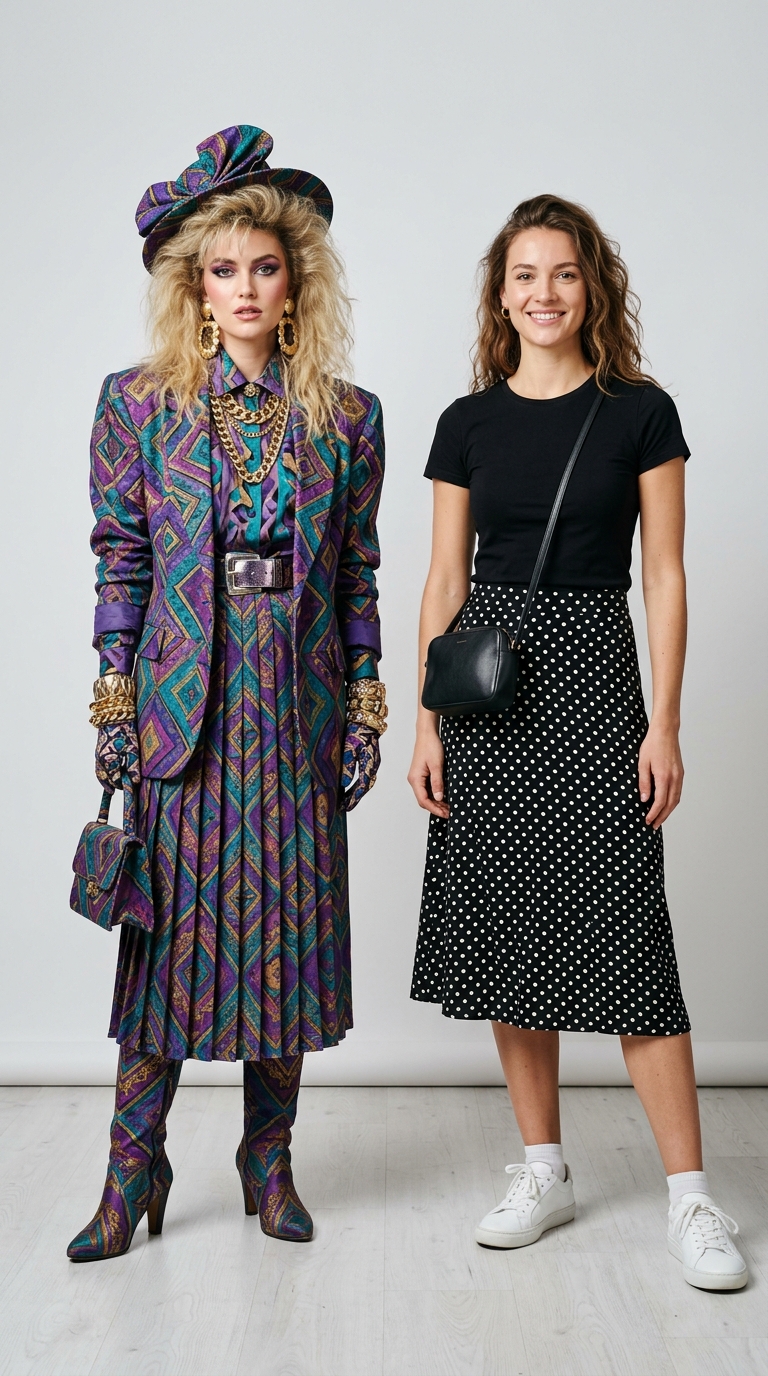
Bold shoulders, saturated color, and statement prints mark the 1980s. This is the decade retro chic borrows from most carefully. A single structured blazer works. A fully committed 1980s silhouette from top to bottom tips into costume faster than any other era.
The Pieces That Build a Retro Chic Wardrobe
A short list of garment types appears again and again, whichever decade you reference:
- High-waisted bottoms: skirts, trousers, and shorts with a high rise are among the most reliable retro signals across every era.
- A-line and fit-and-flare shapes: fitted through the waist and flared below, borrowed mostly from the 1950s and ’60s.
- Statement prints: polka dots, gingham, and saturated florals read as retro rather than simply “patterned,” especially in period-style colorways.
- Structured outerwear: a fitted blazer or cropped jacket keeps a retro-leaning outfit from sliding into loungewear.
- Cat-eye sunglasses and structured bags: accessories often do more of the retro work than the clothes themselves.
- Shoes with a clear shape: block-heel pumps, loafers, or clean leather boots anchor retro silhouettes without feeling theatrical.
How to Build a Retro Chic Outfit, Step by Step
- Choose one era to lead. Mixing a ’50s skirt, ’70s prints, and ’80s shoulders is the fastest route to costume territory. Pick one decade and let it lead.
- Pick one anchor piece. Decide which single item carries the reference, such as a high-waisted skirt, a bold-print blouse, or cat-eye frames, instead of making every item retro.
- Build the rest from modern basics. A well-fitted current top, contemporary denim, or modern shoes keep the look tethered to the present.
- Fit it to your body, not the original era. Vintage sizing differs from today’s. Tailoring matters more than finding something period-exact.
- Add one or two retro accessories, no more. Sunglasses, a bag, or a distinctive piece of jewelry reinforce the reference without adding more clothing.
- Run a gut check. If every element screams the same decade, swap one or two pieces for something neutral.
Hair, Makeup, and Accessories
Hair and makeup can carry a retro chic reference without touching your closet. A defined red lip and winged eyeliner nod to the 1950s and ’60s. Soft waves or a sleek low ponytail do the same with less effort.
The restraint rule applies here too. Full period-accurate hair and makeup layered over a fully committed outfit is where “styled” becomes “themed.”
Accessories are the cheapest, fastest way into the aesthetic. A structured bag, cat-eye sunglasses, a neck scarf, or vintage-style jewelry can push an ordinary modern outfit toward retro chic in seconds.
Three Levers for Keeping It Modern
Avoiding the costume effect comes down to three controls.
- Fit. A period-style silhouette cut to flatter your body today reads as current. The same silhouette in a boxy, ill-fitting cut reads as dated, however authentic the piece is.
- Quantity. Limit loud, era-specific elements. One statement piece plus modern basics reads as styled. Five statement pieces from one decade reads as a costume.
- Pairing. Combine retro elements with unmistakably modern ones, such as current denim, contemporary sneakers, or a minimalist bag, so the outfit says “now, referencing then.”
Costume vs. Chic: A Quick Comparison
| Looks like a costume | Looks like retro chic | |
|---|---|---|
| Pieces | 4–5 items from one decade | 1 anchor piece + modern basics |
| Fit | Boxy or borrowed | Tailored to your body |
| Accessories | Matching period set | One or two, chosen deliberately |
| Hair & makeup | Fully period-accurate | A single nod (lip, liner, or waves) |
| Overall effect | “Themed party” | “Deliberate and current” |
Common Mistakes to Avoid
- Recreating a full decade in one outfit. This is the quickest slide from retro chic into costume. Selective referencing is the whole point.
- Chasing authenticity at the expense of fit. A perfectly authentic piece that doesn’t fit undermines the outfit. Tailor genuine vintage too.
- Skipping accessories. Many people think the look needs a wardrobe overhaul, when a bag, sunglasses, or jewelry alone can do most of the work.
- Assuming it requires expensive vintage shopping. Many modern retailers make well-constructed retro-inspired pieces at accessible prices. Genuine vintage is one path in, not the only one.
Building the Look on Any Budget
- Start with one inexpensive, high-impact accessory, such as cat-eye sunglasses or a structured bag, to test whether the aesthetic suits your daily life.
- If you thrift genuine vintage, set aside money for basic alterations. Fit conventions have shifted enough that even a great find usually needs adjusting.
- Search for pieces labeled “retro-inspired” or “vintage-inspired” if you want the look without the fit and care challenges of genuinely old garments.
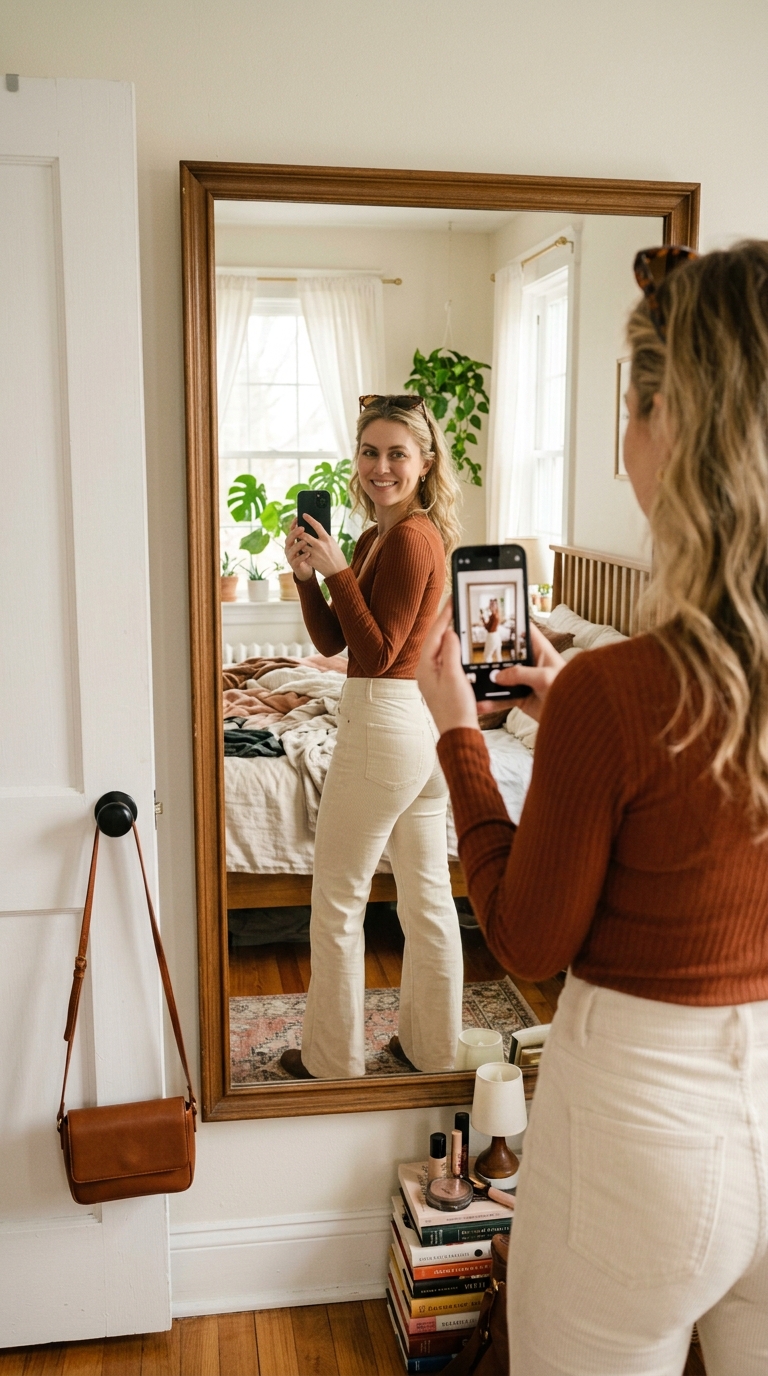
- Photograph the finished outfit before you leave the house. A photo is often the fastest way to see an outfit tipping from “styled” into “themed.”

Key Takeaways
- Retro chic is a styling approach, not a costume and not a specific decade.
- Pick one era, one anchor piece, and one or two accessories.
- Fit beats authenticity every time.
- Pair retro elements with clearly modern basics.
- The lowest-risk first step is a single accessory added to something you already wear.
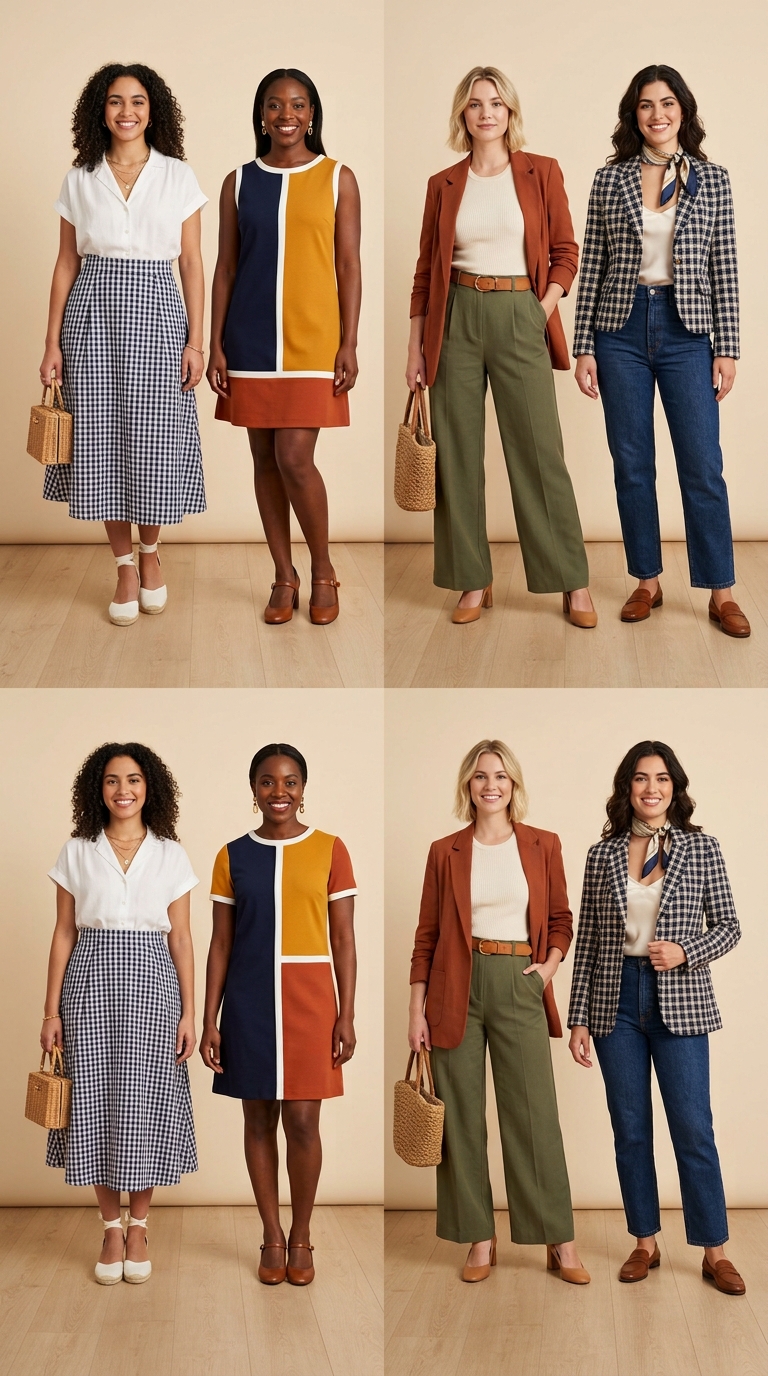
[IMAGE 10: Final look — four outfits in a studio grid, or confident woman on a city street. Alt: “Four finished retro chic outfits styled with one anchor piece each”]
Frequently Asked Questions
What decade does retro chic style come from? No single one. It draws most heavily from the 1950s through the 1980s, borrowing selectively rather than replicating any of them in full.
Is retro chic the same as vintage? No. Vintage describes a garment actually made in a past era. Retro chic describes a styling approach that can use vintage pieces, modern reproductions, or both.
How do I avoid looking like I’m wearing a costume? Focus on fit, limit how many era-specific pieces appear in one outfit, and pair them with clearly modern basics.
Can retro chic work on a tight budget? Yes. Accessories are the cheapest, highest-impact entry point, and many retailers sell retro-inspired clothing at accessible prices.
Can retro chic work in a professional setting? Yes, especially with structured 1960s references. A clean shift-dress silhouette or a tailored blazer with subtle retro detailing suits business-casual settings better than looser 1970s looks.