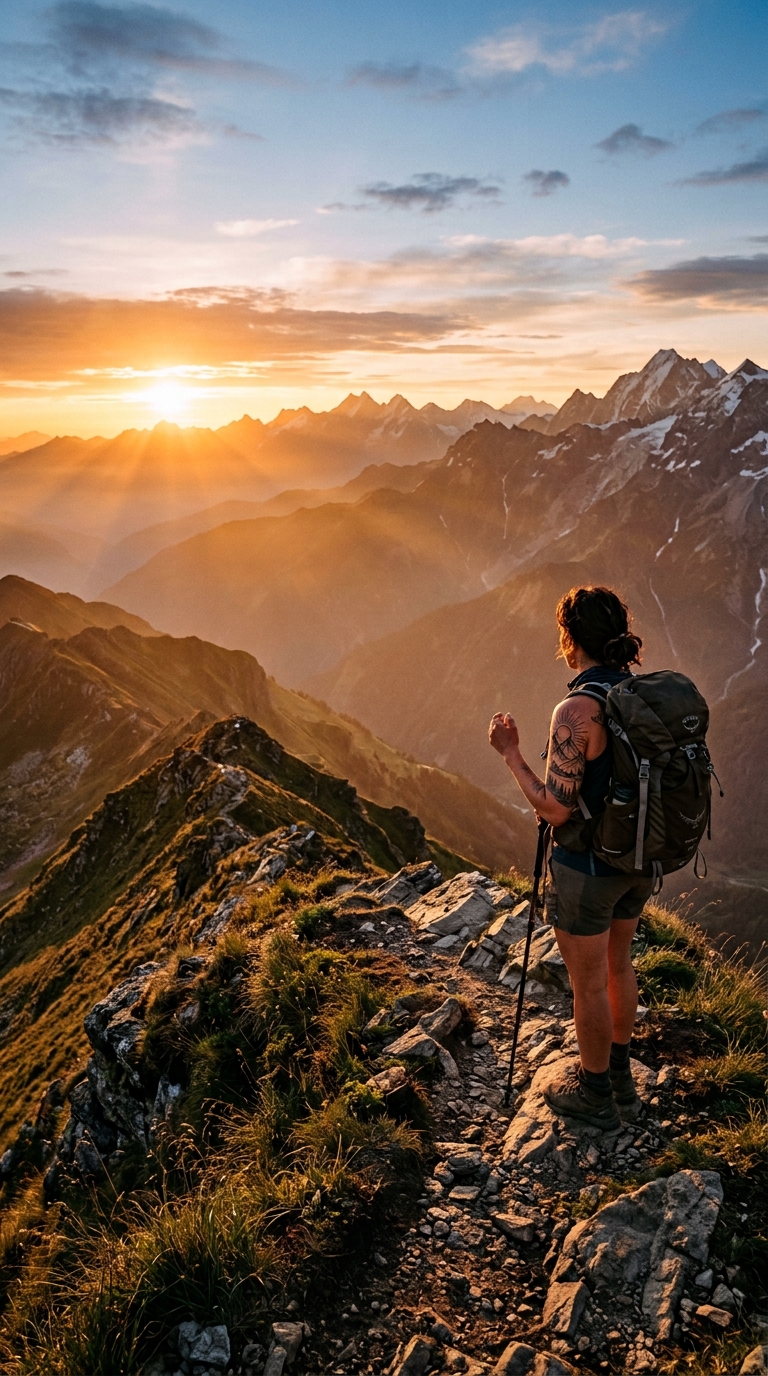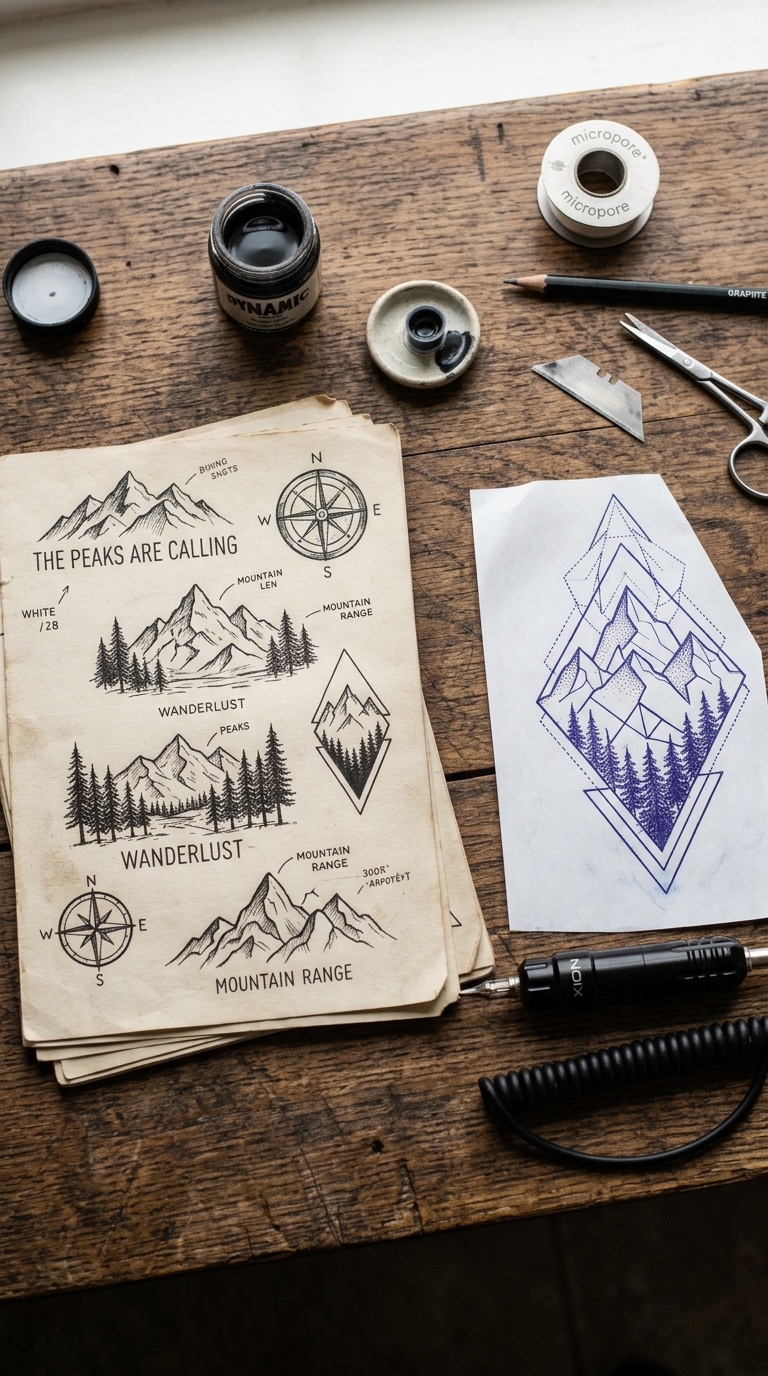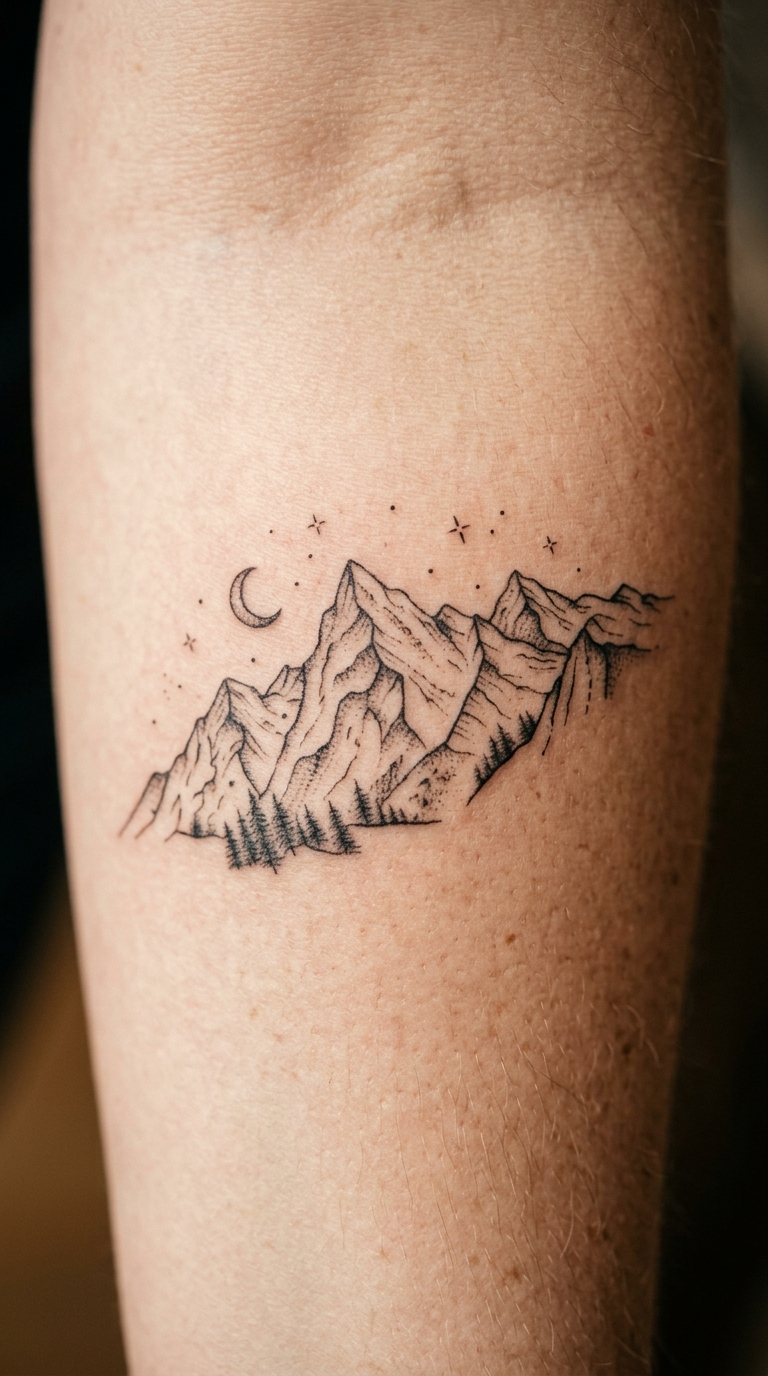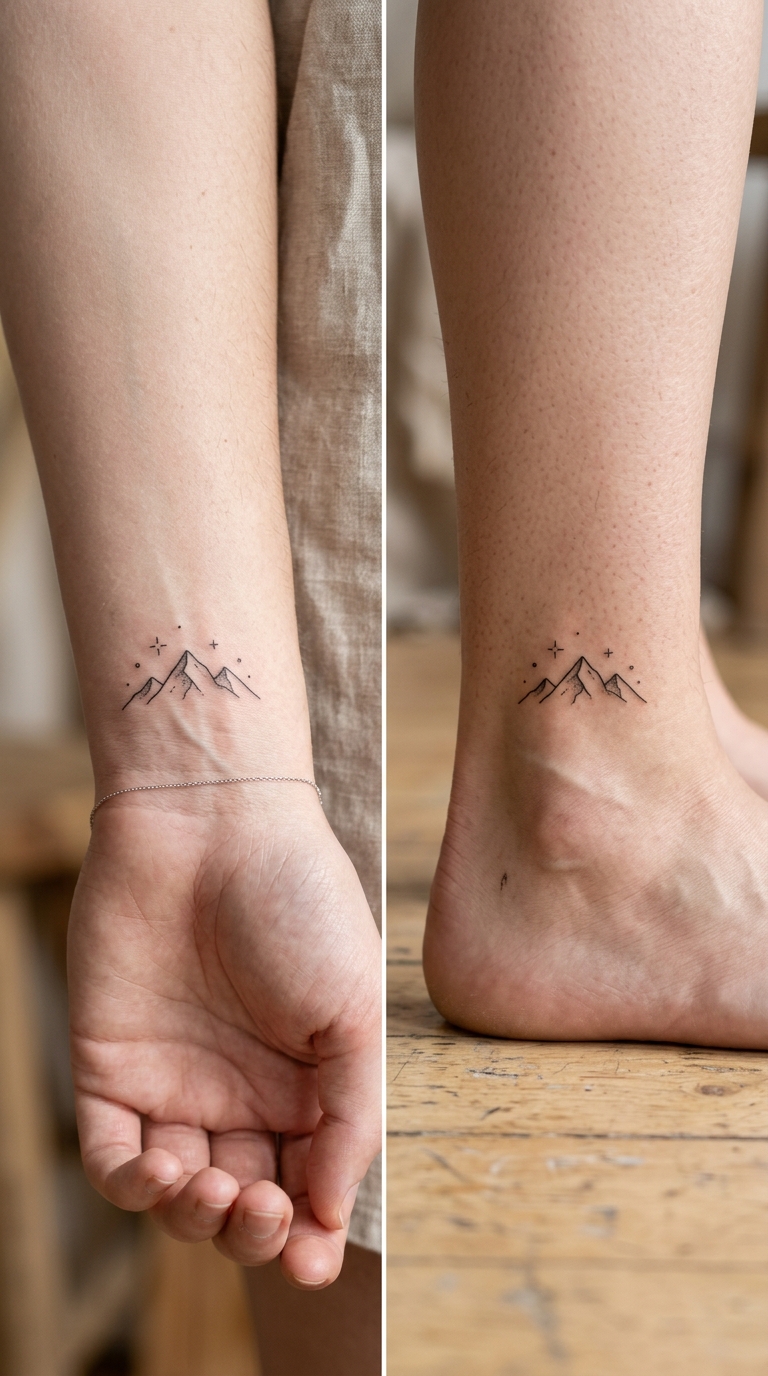
For anyone who feels most like themselves on a trail or at a summit, a mountain tattoo is one of the most versatile ways to carry that connection to nature permanently. Mountains read as strength, stability, and quiet resilience — but the design possibilities range from a single delicate line to a full-back scenic piece with forests, wildlife, and sky.
This guide breaks down the most popular mountain tattoo ideas by style and placement, explains what mountain tattoos symbolize, and covers the practical details — sizing, pain level, cost, and aftercare — that most roundups skip entirely.
What Does a Mountain Tattoo Symbolize?
Across cultures, mountains represent:
- Strength and stability — something immovable, weathering storms without losing shape
- Personal growth — climbing represents overcoming obstacles and reaching goals
- Groundedness with ambition — rooted at the base, always reaching toward the peak
- Freedom and adventure — a nod to hiking, travel, or a specific mountain range that matters to you
- New beginnings — a summit often marks the start of a new chapter or life stage
Because the symbolism is broad and personal rather than tied to one specific meaning, mountain tattoos work well as solo pieces or combined with other elements (sun, moon, stars, water, wildlife) to narrow the message.
Popular Mountain Tattoo Styles
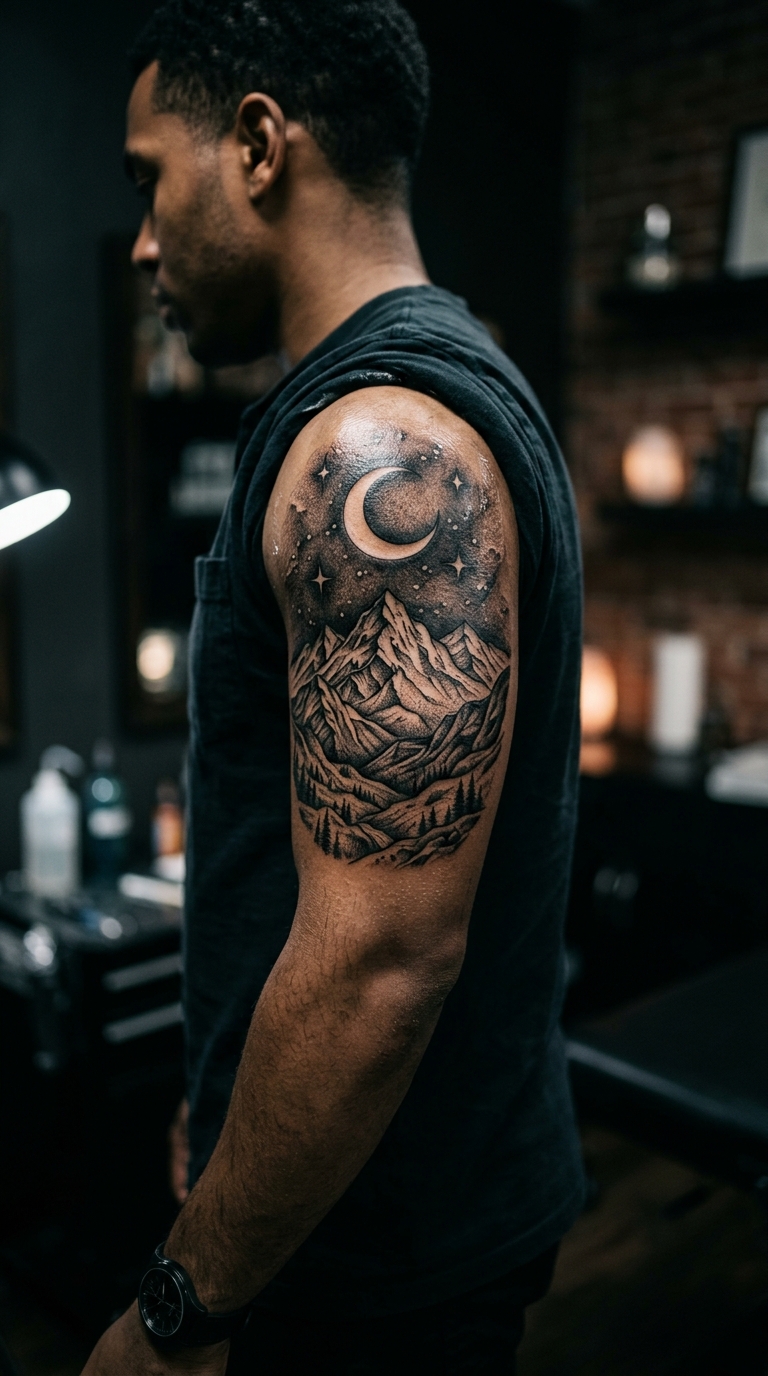
Minimalist & Fine Line Mountain Tattoos
Thin, single-needle outlines that reduce a mountain range to its cleanest silhouette. Popular on the wrist, ankle, or forearm because the design stays legible even at a small size.
Geometric Mountain Tattoos
Peaks broken into triangles, sharp angles, or framed inside a circle/hexagon outline. Reads as modern and structured — a favorite for forearm and upper-arm placements.
Blackwork & Dot Art Mountain Tattoos
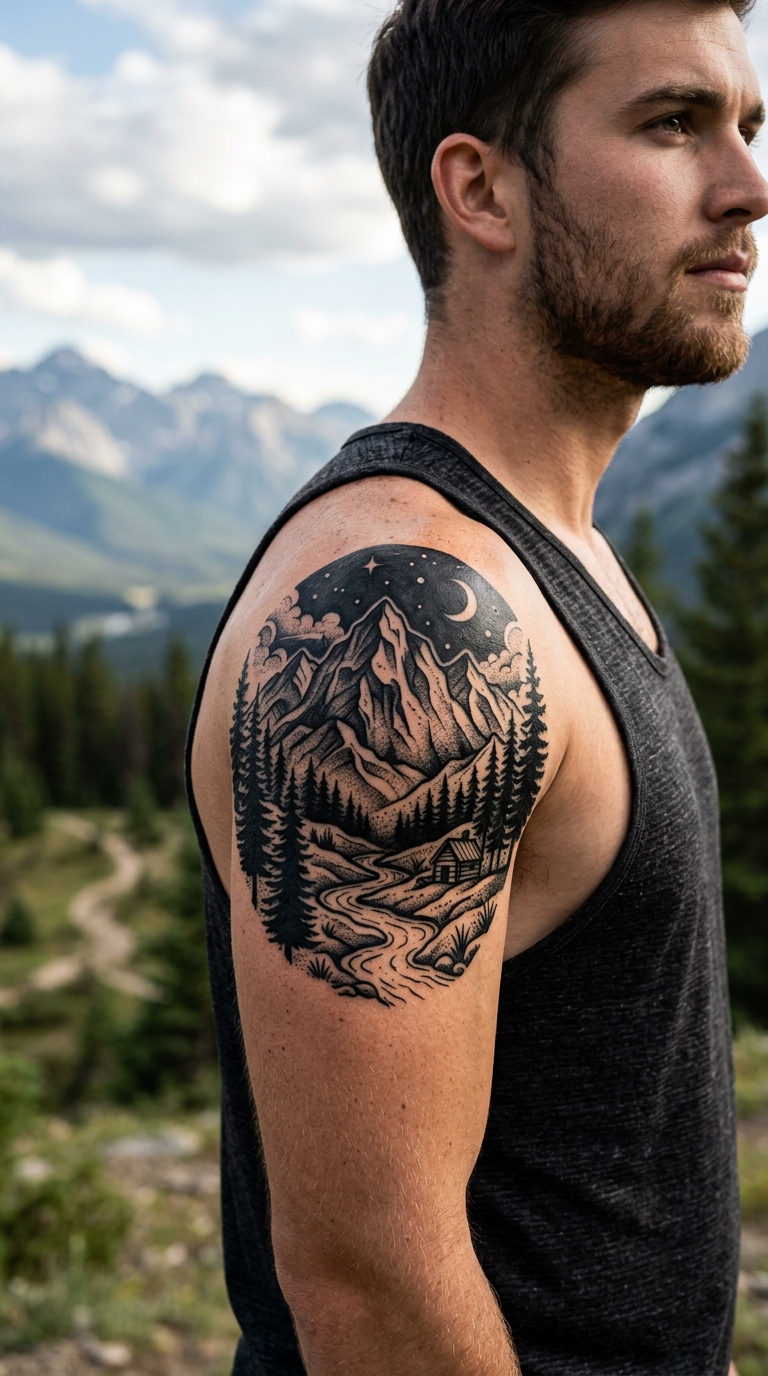
Solid black silhouettes or intricate stippled shading that builds a mountain from thousands of tiny dots. Higher detail, longer session time, but very durable ink retention over the years.
Watercolor & Brush-Stroke Mountain Tattoos
Loose, painterly strokes that mimic ink-wash art. Visually striking but fades faster than blackwork — best suited to clients comfortable with future touch-ups.
Japanese-Style (Irezumi) Mountain Tattoos
Mountains integrated with cherry blossoms, waves, or clouds in traditional Japanese linework and shading — usually a larger back, sleeve, or thigh piece rather than a small accent tattoo.
Realism Mountain Tattoos
Photo-realistic shading of an actual mountain or range (often a specific peak that holds personal meaning), typically done on larger canvases like the back, thigh, or upper arm.
Best Placement Ideas by Body Part
| Placement | Best For | Typical Size | Pain Level* |
|---|---|---|---|
| Wrist | Minimalist, fine line | Small (1–2 in) | Moderate–High (thin skin, close to bone) |
| Ankle | Minimalist, dot art | Small–Medium | Moderate–High |
| Forearm | Fine line, geometric, realism | Small–Large | Low–Moderate |
| Upper arm / shoulder | Armband, sun & moon, colorful scenes | Medium–Large | Low–Moderate |
| Back | Realism, Japanese style, full landscapes | Large–Extra Large | Low–Moderate |
| Neck | Small accent designs | Small | High |
| Thigh | Bold, colorful, wildlife pairings | Medium–Large | Low |
| Ribs / side | Moon phase, balance-themed designs | Medium | High |
| Fingers / hand | Wraparound accent pieces | Small | High |
*Pain level varies by individual pain tolerance; this is a general industry guideline, not a guarantee.
Popular Mountain Tattoo Combinations

Pairing a mountain with a second symbol sharpens the meaning and gives the artist more to work with visually:
- Mountain + Sun and Moon — balance between light and dark, day and night, effort and rest
- Mountain + Moon Phases — cycles of change, patience, and the passage of time
- Mountain + Stars — stargazing, wanderlust, feeling small against something vast
- Mountain + Waves/Ocean — harmony between two different landscapes you love equally
- Mountain + Forest & Camping (tent, pine trees) — a love of the full outdoor experience, not just the peak
- Mountain + Wildlife (wolf, tiger, eagle) — strength and independence layered on top of the mountain’s stability
- Mountain + Rainbow — hope and renewal after difficulty
- Mountain + Compass or Arrow — direction, purpose, staying on your own path
Style Comparison at a Glance
| Style | Detail Level | Best Placement | Longevity Before Touch-Up |
|---|---|---|---|
| Minimalist / Fine Line | Low | Wrist, ankle, forearm | 5–8 years |
| Geometric | Medium | Forearm, upper arm | 6–10 years |
| Blackwork / Dot Art | High | Back, thigh, forearm | 10+ years |
| Watercolor | Medium–High | Shoulder, upper arm | 3–5 years |
| Japanese / Irezumi | Very High | Back, sleeve, thigh | 10+ years |
| Realism | Very High | Back, thigh, large forearm | 8–10 years |
Choosing the Right Size and Placement
- First tattoo? Start small on the wrist, ankle, or forearm — easier to conceal, less painful, and lower cost.
- Want visible detail (shading, multiple peaks, a scene)? You need surface area — think forearm, upper arm, or back rather than wrist or finger.
- Workplace visibility matters? Upper arm, back, thigh, and ribs are easiest to keep covered with everyday clothing.
- Considering color? Color ink fades faster than black/grey — expect a touch-up sooner, especially on high-friction areas like hands and feet.
What to Expect: Cost and the Studio Visit
Pricing varies heavily by studio reputation, city, and artist experience, but as a general guide:
- Small minimalist pieces (wrist, ankle): often priced at a studio’s minimum rate for a single short session
- Medium detailed pieces (forearm, shoulder geometric or dot art): typically billed hourly, 1–3 hours
- Large scenic or realism pieces (back, thigh, full sleeve): multi-session projects, often quoted as a project rate
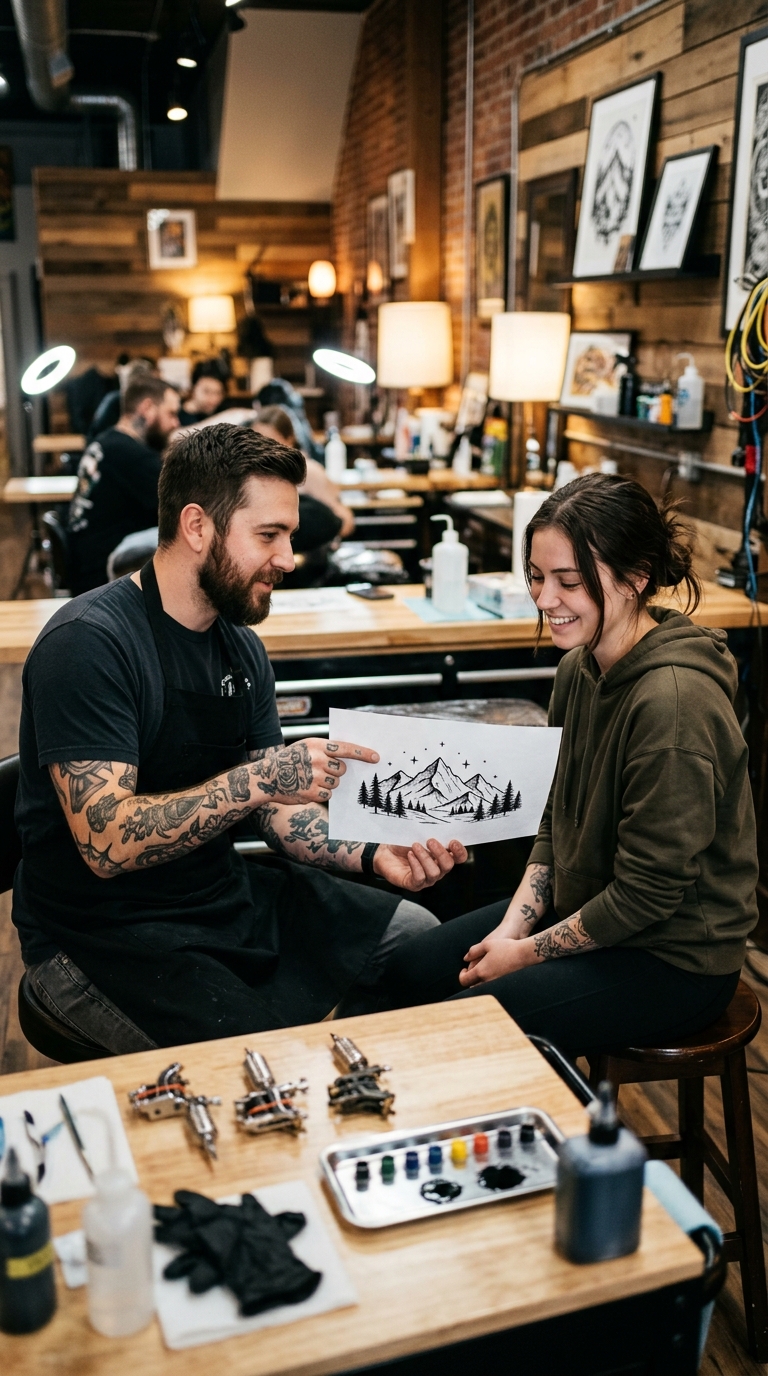
Always request a consultation, view the artist’s portfolio in the specific style you want (fine line, blackwork, realism, etc.), and confirm the studio follows standard hygiene and licensing practices in your area.
Aftercare Tips for a New Mountain Tattoo

- Keep the tattoo covered with the wrap your artist applies for the first few hours only
- Wash gently with fragrance-free soap and lukewarm water, then pat dry
- Apply a thin layer of fragrance-free healing ointment or lotion as recommended by your artist
- Avoid direct sun, swimming pools, and soaking (baths, saunas) until fully healed
- Never pick at peeling or flaking skin — let it shed naturally
- Follow up with your artist if you notice unusual redness, swelling, or discharge
Key Takeaways
- Mountain tattoos symbolize strength, stability, growth, and a connection to nature — flexible enough for both minimalist and highly detailed styles.
- Placement should match your desired size and detail level: wrist and ankle for minimalist outlines, forearm and back for detailed scenes.
- Combining a mountain with sun/moon, stars, water, or wildlife sharpens the personal meaning of the piece.
- Color and watercolor styles fade faster than blackwork, dot art, or Japanese-style linework.
- Always consult a licensed artist, review style-specific portfolio work, and follow proper aftercare to protect the final result.
Frequently Asked Questions
What does a mountain tattoo mean? Mountain tattoos generally symbolize strength, stability, personal growth, and a love of adventure or the outdoors. The exact meaning is personal and often shaped by pairing the mountain with other symbols like the sun, moon, or stars.
Where is the best placement for a small mountain tattoo? The wrist, ankle, and forearm are the most popular spots for small, minimalist mountain tattoo designs because the simple outline stays clear and legible even at a compact size.
Do mountain tattoos hurt more in certain spots? Yes — areas with thin skin and close bone contact, like the wrist, ankle, ribs, and neck, tend to be more painful than fleshier areas like the forearm, upper arm, or thigh.
How much does a mountain tattoo cost? Cost depends on size, detail, and studio location. Small minimalist designs are usually priced at a studio’s baseline rate, while larger detailed or scenic pieces are billed hourly or as a multi-session project.
Which tattoo style lasts the longest without touch-ups? Blackwork, dot art, and Japanese-style (irezumi) mountain tattoos tend to hold their detail longest, often 10+ years before needing a touch-up, compared to watercolor styles which fade faster.